




Injection Mold Factory: Layout, Equipment and Audit
A plastic injection mold factory is not a single machine — it is a sequence of bays, each with its own equipment, its own tolerances, and its own failure modes. Reading a factory correctly tells you whether the shop can hold your tolerance, meet your schedule, and correct problems without shipping the tool back and forth. This page walks through the layout of a plastic injection mold workshop, explains what missing machines mean for your tool, and gives you the audit questions that separate real capacity from a good website. For the tool design and manufacturer comparison behind the visit, start with our plastic injection mold hub page .
| Layout rule | Steel in one door, tool out the other |
|---|---|
| Tryout press | 50–250 T typical mid-size shop |
| Metrology | CMM · roughness · steel certs |
| Pilot batch | 500–1,000 pcs before shipment |
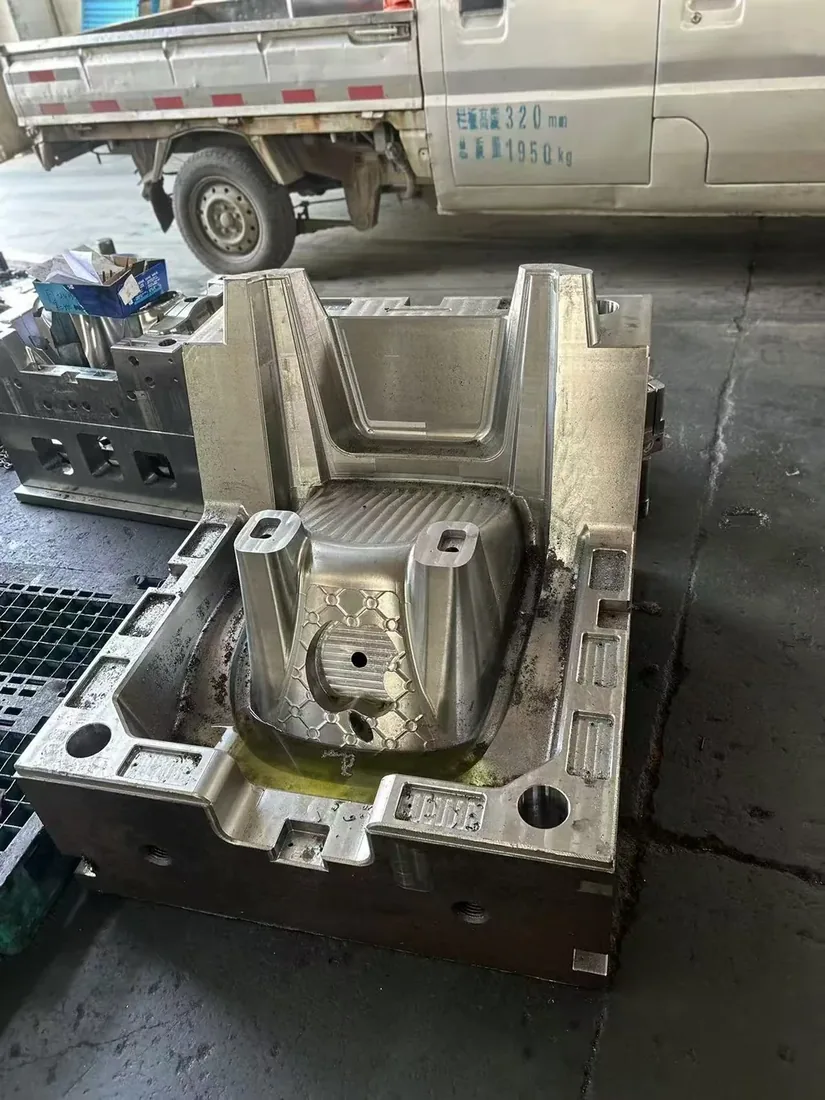
1. Factory Layout: Machining, EDM, Assembly, Tryout
A well-organized plastic injection mold factory flows in one direction: raw steel in one door, finished tool out the other. The bays you should see:
- Machining bay. CNC machining centers for roughing and finishing, plus a saw and a grinder for stock preparation. A factory plastic injection mold operation that outsources roughing but keeps finishing in-house is common and acceptable; one that outsources finishing has given up control of tolerance.
- EDM room. Wire EDM for shutoffs and slider pockets, sinker EDM for deep ribs and fine detail. The EDM room should be temperature-controlled — EDM accuracy drifts with temperature.
- Assembly and fit bench. A clean area where cavity, core, sliders, ejector system, and hot runner are fitted and checked. Injection mold plastic factory assembly is where shutoff contact and slider movement are verified before tryout.
- Tryout center and its tonnage range. The tryout press is the heart of a plastic injection mold workshop. Ask for the tonnage range: a shop with a 50–250 T tryout press can trial small and medium tools but must send large tools out. A high precision plastic injection mold manufacturing factory usually has a tryout press matched to its typical mold size, plus a machine capable of running the resin you specify.
- Metrology room. Covered in section 03 — but note where it sits. If inspection is in another building, first-article reports come back late.
Mold plastic injection factory layout that puts tryout next to assembly shortens the correction loop; a layout that separates them adds days to every correction.
Walk the flow, not the brochure. Follow one tool from the saw to the tryout press on foot. If the steel travels between buildings more than once, your correction loop will be measured in trucks and not in hours.
2. Equipment List and What Missing Machines Mean
An injection mold plastic factory equipment list is a capability statement. Read it for what is missing as much as for what is present.
Table 1 · Missing machine, and what it costs your tool
| Missing | What happens instead | Effect on your tool |
|---|---|---|
| Wire EDM | Shutoffs and slider pockets cut by CNC or outsourced | Tolerance and schedule both suffer |
| Sinker EDM | Deep ribs and fine detail cannot be produced in-house | Detail depth, text and texture go to a third party |
| Grinder | Mating surfaces not finished to flatness | Uneven clamp load, parting-line flash |
| Tryout press | Tool proven on someone else's machine | You inherit the trial risk and the delay |
A plastic injection mold machine factory list that shows only CNC machining centers is a machining shop, not a mold factory. A plastic injection mold tooling factory that lists CNC, EDM, wire cut, grinding, and tryout is a full-chain shop.
High performance plastic injection mold manufacturing factory and high precision plastic injection mold manufacturing factory claims should be matched by equipment: high-speed machining centers, temperature-controlled EDM, and a CMM. Precision plastic injection mold factory and precision plastic injection mold manufacturing factory capability shows in the metrology room, not the brochure.
Plastic injection mold design factory and plastic injection mold design factories that do design in-house can catch DFM issues early; a plastic injection mold design basics factory that only quotes from customer drawings is a different service model. Plastic injection mold design basics factories are fine for simple tools and a poor fit for complex ones.
Table 3 · An equipment line written so it can be checked
| Machine | Accuracy | Spindle | Travel X × Y × Z |
|---|---|---|---|
| 5-axis machining centre, NMV5000 DCG | 0.006 mm | 20,000 rpm | 730 × 510 × 510 |
| High-speed milling, MIKRON HSM500 | 0.005 mm | 42,000 rpm | 500 × 450 × 350 |
A line written to model, travel and spindle speed can be matched against your part in one pass. A list of machine categories cannot, which is why the detailed line is the one worth asking for.
3. Metrology: CMM, Roughness, Steel Certification
Metrology is where a plastic injection mold factory proves its tolerances. Three instruments matter:
- CMM (coordinate measuring machine). For cavity and core dimensions, shutoff fit, and first-article inspection. A plastic injection mold factory without a CMM cannot verify the tolerances it claims; it is measuring with calipers and hoping.
- Roughness tester. For polished and textured surfaces. Plastic injection mold workshop polishing quality is measured, not eyeballed — a roughness tester tells you whether the cavity will produce a glossy or hazy part.
- Steel certification. For every steel block: grade, hardness, and heat-treatment record. A plastic injection mold manufacture factory that cannot produce a steel certificate is asking you to trust a label.
Plastic injection mold supplies factory and plastic injection mold tools factory audits should include the metrology room and the steel storage area — how steel is stored tells you whether it is protected from rust and damage.
4. Workshop Management, Scheduling and Pilot Production
Plastic injection mold workshop management is the difference between a shop that hits dates and one that explains delays. What to look for:
- Scheduling board. A visible schedule with mold numbers, current step, and promised date. A plastic injection mold factory that cannot show you the schedule is managing by memory.
- Inspection points. Each step has a check before the next begins — rough stock, heat-treat hardness, CNC dimensions, EDM detail, grind flatness, polish finish, fit contact.
- Pilot production before shipment: 500 to 1,000 pieces. A plastic injection mold factory that runs a pilot batch before shipping proves the tool under production conditions, not just trial conditions. Pilot production before shipment: 500 to 1,000 pieces catches gate freeze, cooling imbalance, and ejection problems that a short trial misses.
Plastic mold injection factory and plastic mold injection molding factories that skip pilot production are handing you a tool that has been proven only in the tryout room. Plastic mold injection companies factory management discipline shows in the pilot batch report.
5. Audit Questions That Reveal Real Capacity
Audit questions that reveal real capacity are questions a shop cannot answer with a brochure:
- Which steps are in-house, and which are outsourced?
- What is the largest mold you have built, and on what press did you trial it?
- Show me a dimensional report from a recent tryout. Recent, not a showpiece from three years ago.
- What is your correction turnaround on a shutoff mismatch? Hours and days, not "fast".
- How many molds are on the floor right now, and how many machinists are running them? Load and staffing, side by side.
- What is your steel storage procedure? Racked, marked, protected — or stacked in the yard.
- Who signs the tryout report, and what happens if the part fails?
- What is your pilot production quantity before shipment?
A plastic injection mold factory that answers these with documents is a real factory. Injection plastic mold factory and injection plastic mold factories that answer with adjectives are a sales office.
Plastic injection mold maker factory and plastic injection mold makers factory audits should include a walk through the shop floor, not just a meeting room. Plastic injection mold making factory and plastic injection mold making factories capability shows in the chips on the floor, not the logo on the wall.
6. How to Find a Factory: Website, Referrals and Near-Me Searches
Plastic injection mold factory website is a starting point, not a verdict. A good site lists equipment, cavity range, steel stock, and tryout tonnage. A plastic injection mold factory website that lists only "precision" and "quality" is telling you nothing.
Referrals are stronger than search results. Ask other buyers in your industry who they use and why.
Near-me searches. Plastic mold injection companies near me and plastic mold injection factory searches return local suppliers; use them to build a shortlist, then apply the audit questions. Plastic mold injection at home factories are not production factories — they are hobby or small-batch operations. Plastic mold injection machine factory and plastic mold injection machines factory supply presses, not molds.
Plastic injection mold USA factories and plastic injection mold USA factory results are domestic suppliers; the next section deals with regional searches such as “injection mold factory near me” and what the factory location actually changes. Plastic injection mold for camera enclosure mold factory is a niche application — camera enclosures need tight cosmetic control, so ask for that experience specifically.
7. Where the Factory Is: Location and What It Changes
Where the factory is decides three things buyers actually feel: how the mold travels to your port, how fast a correction can be made and shipped, and who answers the phone when a trial goes wrong. Our plant is in Chongqing — No. 7-75, Middle Section of Daxuecheng Road, Huxi Street, High-tech Zone — an inland city with a rail-and-river route to Shanghai and Shenzhen, and a direct air link from Jiangbei airport.
Table 2 · Location factors and what they change
| What location changes | Our situation | What to verify with any supplier |
|---|---|---|
| Freight route and transit | Inland haul to a Shanghai or Shenzhen feeder, or rail to Yantian; typically 30–45 days to Los Angeles or Long Beach, 18–25 days to Port Klang, Tanjung Priok or Ho Chi Minh City, and 3–5 days by air to Taipei or Hong Kong | Ask for the route and the transit time in writing, not “about a month” |
| Steel supply | P20, 718H and S136 blocks held in stock or drawn from Yangtze-delta warehouses in 5–7 days | Ask which grades are on the shelf today and which are ordered per job |
| Correction turnaround | One plant, one team: a T1 correction is machined and re-tried in-house | Ask who pays the air freight if a correction is needed after the trial |
| Tryout capacity | In-house tryout presses from 160 to 450 T, with the tonnage report issued per trial | Ask for the tryout press size and a recent dimensional report |
Chinese tooling clusters and what each is known for
The cluster a factory sits in shapes the work it is good at. This is the map we use when a part does not fit our own bench:
Table 3 · Tooling clusters and their strengths
| Cluster | Typical strength | Relevant to |
|---|---|---|
| Shenzhen – Dongguan | Electronics housings, connectors, fast-cycle consumer parts | Electronics, packaging |
| Taizhou – Huangyan | Houseware, cutlery and thin-wall food containers | Cups, cutlery, kitchenware |
| Suzhou – Kunshan | Precision and cleanroom tooling, medical and automotive sensors | Medical, automotive |
| Ningbo | Large molds, appliance and crate tools | Appliances, logistics |
| Chongqing | Automotive, motorcycle and household tooling, inland freight by rail — our base | Our own production |
An inland factory is not automatically cheaper or slower. What changes is the freight leg and the number of hands the mold passes through: a coastal trading company adds a margin and a delay, an inland plant ships direct but pays more to reach the sea. Judge the route, not the postcode.
Questions that reveal whether the location is real
- Which port do you ship from, and what is the inland leg to get there?
- Which steel is on the shelf today, and which is ordered per job?
- Can we see the tryout press and a tonnage report on a video call?
- If a correction is needed at T1, who pays the air freight and how many days does it add?
- Who signs the dimensional report — the same engineer who designed the tool?
Location is not a quality argument. A plant two hours from your factory with no CMM is worse than a plant across the Pacific with one. Ask for the address, the equipment list and a recent report, then judge the documents.
8. Where to Go Next
If you are evaluating a factory, send us your part package and we will tell you which of these capability points matter most for your tool. For the design stage that precedes the factory, see our plastic injection mold design service page; for the steel grades the factory should stock, see our injection mold steel page. For the full picture of structure, types, companies and buying, return to our plastic injection mold hub page.
Send the part, get the audit shortlist. Part drawing, resin, cavity count and annual volume. You get the capability points that actually matter for that tool, the eight audit questions answered in writing, and a factory shortlist for your region.
Start the quote on WhatsApp (+86 191 1290 5173) or email 877657530@qq.com
All 34 pages in this injection mold guide
Foundations and design
- Hub: types, structure, companies
- Mold types, pros and cons
- Design service and workflow
- Mold flow analysis and 3D design
- Gate, runner, cooling, ejection
- Mold steel, aluminum and copper
- Commodity plastics: PP, ABS, PC
- Engineering plastics: PA, POM, PBT
Cost and delivery
- Cost breakdown
- Price range, quote, lead time
- Prototype and low volume
- Quality, precision, defects
- Cleaning, maintenance, repair
- Custom mold: drawing to T1
Sourcing and supply
- Tooling service: CNC, EDM, tryout
- Manufacturers and maker directory
- Suppliers and exporters
- China supplier and export
- China custom OEM / ODM
- Import, HS code and duty
By industry
- Medical
- Electronics
- Refrigerator and white goods
- Small appliance and houseware
- Automotive interior and exterior
- Automotive engineering plastics
- Motorcycle plastics
- Packaging, crate, pallet
- Cup, cutlery, container
- Furniture and chair
- Industrial, agricultural, construction
- Machine tonnage and fit
- Product cases: spoon, stopper, cup, sensor
Talk to the factory
WhatsApp and email reach the same team that cuts the steel, not a trading desk. Send the 3D file, the annual volume and the resin grade, and you get a quote with cavity count, steel and lead time.
- WhatsApp: +86 191 1290 5173
- Email: 877657530@qq.com
- Mold catalogue in English: Injection molds built in Chongqing · Catálogo en español