




Automotive Interior and Exterior Molds: Bumper, Dash, Trim
We build automotive plastic injection mold for the parts customers see and touch: bumpers, fenders, dashboards, door trims, grilles and lamp housings. Three things decide whether these tools succeed — Class A surface quality, paint compatibility, and dimensional control on large molds. This page explains how we design around each, and how you can check a supplier before you commit.
| Part groups | Four, from bumper to lamp |
|---|---|
| Exterior | Flow balance at the far edges |
| Class A | Texture and gloss as input |
| Judgement | Against checking fixtures |
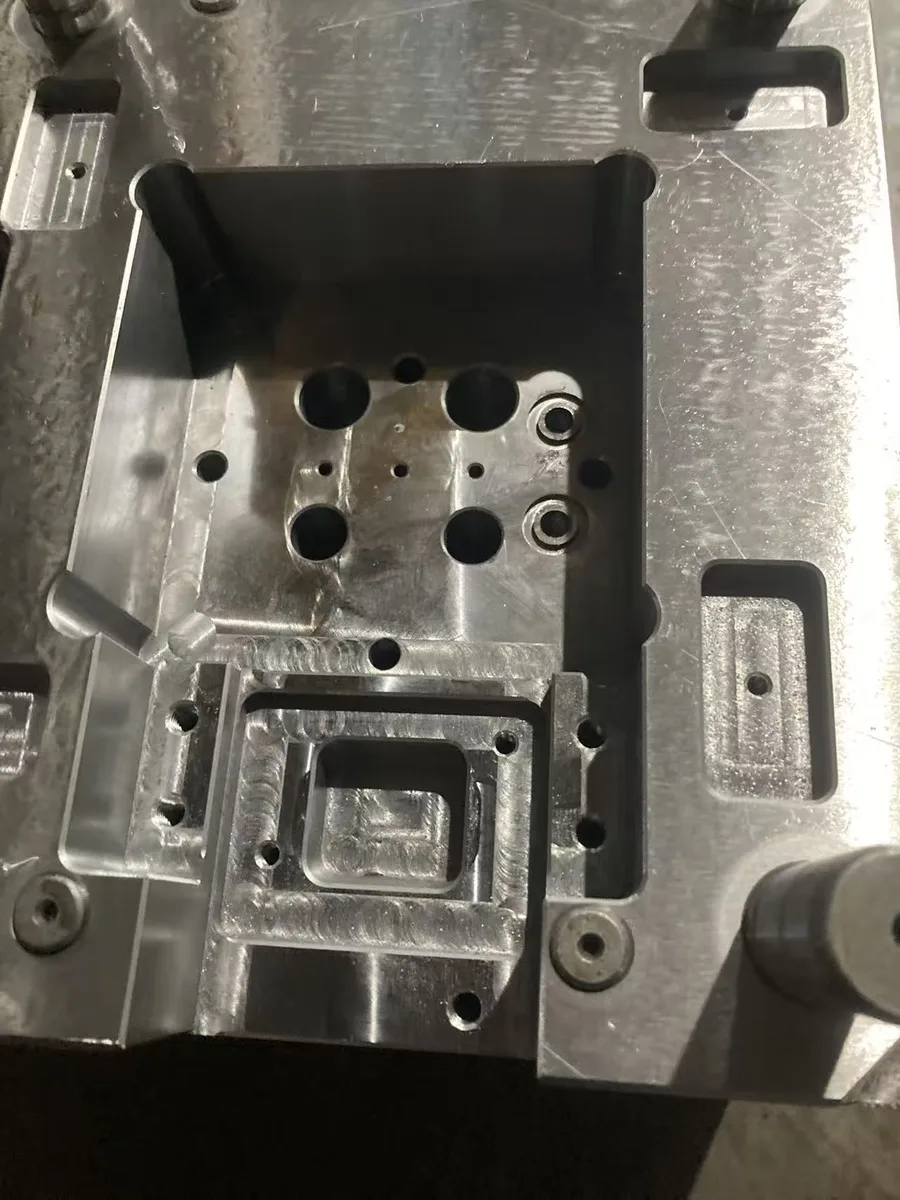
1. Which Automotive Part Are You Making?
You can place your part in one of four groups. Exterior large parts — bumpers and fenders — are about large molds and flow balance. Interior cosmetic parts — dashboards and door trims — are about Class A surface. Grilles and exterior trim are about texture and paint. Lamp and optical parts are about optical polish and metallizing.
Table 1 · Four automotive groups
| Group | What it asks of the tool | Where it fails |
|---|---|---|
| Bumpers, fenders | Large mold, balanced flow, cooling across long thin sections | Short shots at the far edge, warp that fights the fixture |
| Dashboards, door trims | Class A grain, gloss target, defined visible surface | Flow marks and gloss variation at first tryout |
| Grilles, exterior trim | Texture depth paired to one paint system | Glossy patch after painting; adhesion loss |
| Lamp housings, optics | Optical polish grade, stress-free part before coating | Haze after aluminizing; coating peel |
We quote an automotive interior plastic injection mold project, an automotive interior injection plastic mold project, or an exterior tool only after we know which group you are in, because steel, cooling and cavity count all follow from that answer.
We will start with exterior large parts, because they test flow design hardest.
2. Bumpers and Fenders: Large Molds and Flow Balance
A bumper is a large-mold flow-balance problem. You should give us the 3D, the wall-thickness map, the annual volume and the definition of the visible surface, because those four decide gate position and cooling layout more than the part size does.
When we build a plastic auto fender injection mold, we balance the runner so the melt reaches the far edges at the same time, and we design cooling so the long, thin sections do not warp. A customized plastic auto fender injection mold project starts with fill and cooling analysis, not with a steel order. If you are comparing a cheap plastic auto fender injection mold quote against a low price plastic auto fender injection mold quote, ask both suppliers for the analysis — the difference in price is usually the difference in engineering.
We also handle plastic auto fender injection mold supply and plastic auto fender injection mold wholesale programs for customers who need repeat tools across model years.
Bumpers are a flow problem; dashboards are an appearance problem.
3. Dashboards and Door Trims: Cosmetic Class A
A dashboard is judged by the eye, so we treat the Class A standard as a hard input. You should give us a texture number, a gloss target and a clear definition of which surfaces are visible. An automotive interior plastic injection mold for a Class A part is built around that definition, and an automotive interior plastic injection mold design that ignores it will show flow marks at the first tryout.
We also build automotive interior plastic injection mold manufacturing programs and provide automotive interior plastic injection mold manufacturing service for customers who need the tool and the process validation together. For door panels, a plastic injection mold for car door decoration panel must control both the grain and the assembly edge, and a china plastic injection mold for car door decoration panel project carries the same requirement — the origin of the tool does not change the cosmetic standard.
Grain and edge are one requirement, not two. A door panel that holds grain but misses the assembly edge is rejected at the fixture, and one that fits but shows a grain break at the edge is rejected by the eye. Both are settled in mold design.
Interior parts are about appearance; grilles are about texture and paint together.
4. Grilles and Exterior Trim: Texture and Paint
Grilles combine texture and paint, which means two specifications must match. You should give us the texture depth and the paint system, because an auto trim plastic injection mold that etches for one paint system may not hold adhesion for another.
Table 2 · Texture and paint must be specified together
| Specification | What you supply | What happens if it is left open |
|---|---|---|
| Texture depth | Texture number and depth in mm | Shallow patch reads as a glossy spot after painting |
| Paint system | Primer, base and clear, with bake temperature | Etch depth chosen for another system; adhesion fails |
| Surface energy | Whether the part is flame or plasma treated | Paint wetting differs across the cavity, patchy colour |
| Polish and steel | Finish grade agreed with the paint line | Polishing to a "bright" look that the paint cannot hold |
Texture consistency matters across the whole cavity, because a shallow patch shows as a glossy spot after painting. Paint compatibility depends on surface energy, which depends on steel, polish and process — so we set all three together rather than treating paint as the painter's problem.
Once appearance is settled, dimensional control takes over.
5. Dimensional and Fixture Requirements
Automotive parts are judged against checking fixtures, so you must agree on the dimension chain and on who supplies the fixture. We design the mold's locating features and assembly interfaces to match your fixture, and we ask you to confirm the datum before steel is cut.
- Datum. One datum chain, written down and signed by both sides before design freeze.
- Fixture plan. Send it with the RFQ — holder points, checking pins and the tolerance per feature.
- Tolerance split. Decide how much of the drawing tolerance belongs to the tool and how much to the process.
- Ownership. Name who supplies the fixture, so assembly gaps are not traced to the mold by default.
This is where the role of automotive interior plastic injection mold design becomes obvious: a tool that meets the drawing but not the fixture still fails at assembly. You should send us the fixture plan with the RFQ.
Dimensions are settled on the bench; tonnage is settled on the press.
6. Tonnage and Press Size for Exterior Parts
You must confirm the mold fits your press before you approve the design. We calculate clamping force from projected area, check the mold envelope against your platen and tie-bar spacing, and check shot size against your injection unit. This is standard practice for exterior parts, and it is where large automotive projects most often fail late.
Table 3 · Three checks before design approval
| Check | Measured against | Failure if skipped |
|---|---|---|
| Clamping force | Projected area × cavity pressure | Flash at the parting line that no process setting removes |
| Mold envelope | Platen size and tie-bar spacing | Mold does not go into the press at all |
| Shot size | Injection unit capacity and plasticising rate | Short shots, long recovery, cycle time that will not hold |
Our guide to injection-molding-machine-tonnage covers the calculation in detail. Send us your press specification with the RFQ, and we will confirm fit before quoting.
Fitting the press is only half of it — the material has to suit the paint.
7. PP Compound Selection for Painted Parts
Paint adhesion on PP parts depends on the compound, not just on the mold. You should give us the exact PP grade and the paint system, because a compound formulated for painting behaves differently from a standard grade, and the mold surface must match it.
We set steel, polish and gate location around the compound you choose, so that the painted part holds adhesion through the bake cycle. A tool built for the wrong compound will pass tryout and fail at the paint line.
Exterior and interior parts are visible; lamp parts are optical.
8. Lamp Housings and Optical Parts: Optical Polish, Aluminizing and UV Coating
Lamp housings demand optical polish, and optical polish is a specification with a number. We polish to the grade your optical standard requires, and we design gates and cooling so the part does not carry stress that shows after aluminizing. A car mirror plastic injection mold follows the same rule, and so do reflectors, light guides and trim rings.
You should tell us the aluminizing and UV coating process, because coating adhesion depends on the surface you hand over. We treat the mold surface and the coating process as one system.
- Vehicle and year. Which model the lamp fits and which year range, because one name often covers two different tools.
- Optical requirement. Haze and light transmission, stated as a number rather than as "clear".
- Post-process. Aluminising, UV coating or hard coat — each adds a station and a tolerance to the chain.
Once the part family is clear, the next step is working with us.
9. How We Work With You
Send us your 3D files, your cosmetic standard and your annual volume. We will return a quote within 48 hours that states tonnage, cavity count, steel and polish grade, so you can compare suppliers on equal terms.
We build interior and exterior tools for customers who need a supply plastic auto fender injection mold program, a china plastic injection mold for auto door switch panel project, or a full interior and exterior package. If you want to compare tooling cost against piece cost, our guide to plastic-injection-mold-cost shows you the math.
Tell us which of the four automotive groups you are in, and we will tell you exactly what the tool needs.
Send the 3D, the cosmetic standard, the volume. You get a 48-hour quote stating tonnage, cavity count, steel and polish grade — plus the fill and cooling analysis when the part is a bumper, fender or large panel.
Start the quote on WhatsApp (+86 191 1290 5173) or email 877657530@qq.com
All 34 pages in this injection mold guide
Foundations and design
- Hub: types, structure, companies
- Mold types, pros and cons
- Design service and workflow
- Mold flow analysis and 3D design
- Gate, runner, cooling, ejection
- Mold steel, aluminum and copper
- Commodity plastics: PP, ABS, PC
- Engineering plastics: PA, POM, PBT
Cost and delivery
- Cost breakdown
- Price range, quote, lead time
- Prototype, low volume, mass production
- Quality, class, defects, safety
- Cleaning, maintenance, repair
- Custom mold: drawing to T1
Sourcing and supply
- Tooling service: CNC, EDM, tryout
- Manufacturers and maker directory
- Factory layout and audit
- Suppliers, exporters and verification
- China supply, price, export
- China OEM / ODM process
By industry
Talk to the factory
WhatsApp and email reach the same team that cuts the steel, not a trading desk. Send the 3D file, the annual volume and the resin grade, and you get a quote with cavity count, steel and lead time.
- WhatsApp: +86 191 1290 5173
- Email: 877657530@qq.com
- Mold catalogue in English: Injection molds built in Chongqing · Catálogo en español