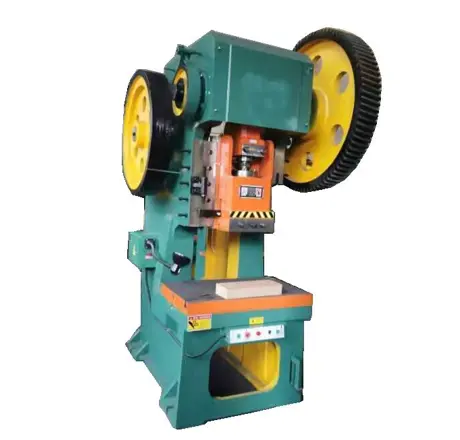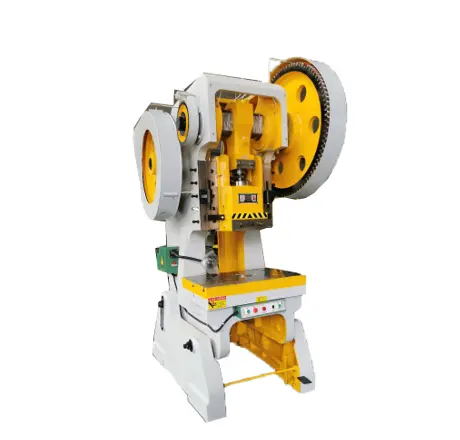



sheet metal punch press machine
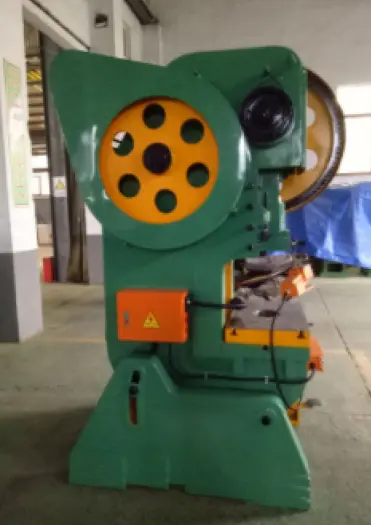
60 ton punch press for sale
punch press machine price:3800 dollars
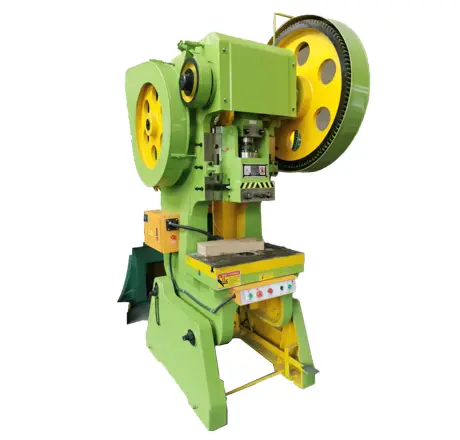
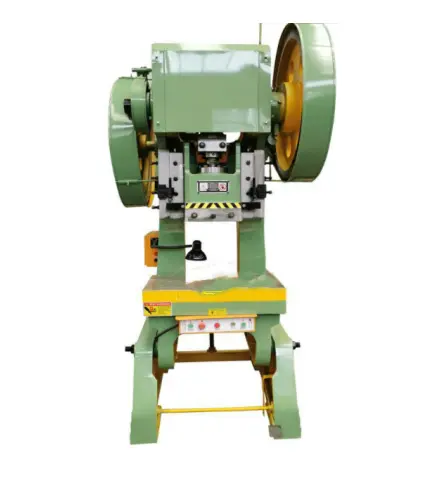
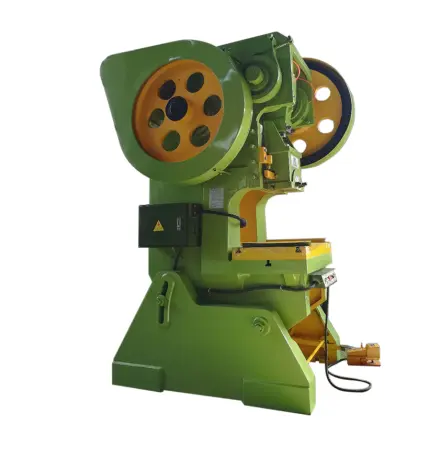
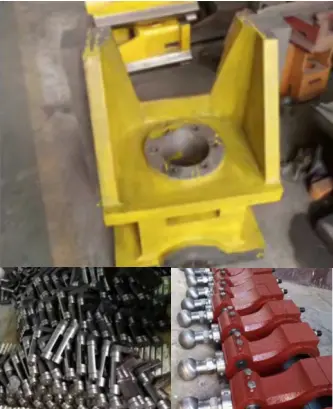
● Characteristic
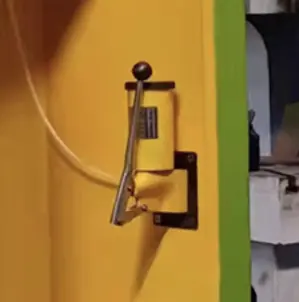
This of sheet metal punch press machine for sale is equipped with a manual oil lubrication device. The manual oil pump is easy to operate and helps reduce friction and mechanical resistance in the punch press.
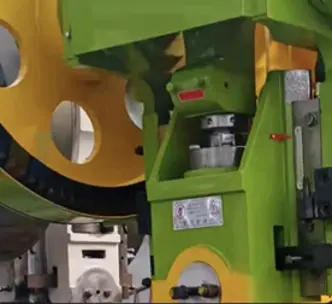
The punch press machine design is very precise, and punch press machine parts (such as crankshaft, screw rods, electrical appliances and ball joints etc) are checked by our quality inspection department to ensure the punch quality and service life.
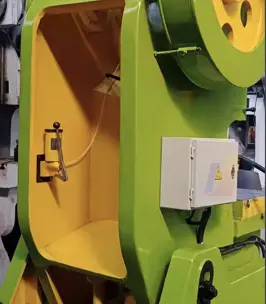
Clients can choose punch press machine guarding such as grating protection and protective isolation net for their punch press machine.
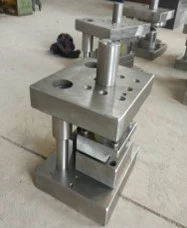
By changing different dies, the punch press machine metal can produce different metal products and have different usages, it can be hole punch press machine, punch press cutting machine and punch press machine for metal forming.
● Parameter of 60 ton punch press
| Model | J23-63t |
| Punch press machine capacity | 630 |
| Nominal Stroke(mm) | 100 |
| SPM (times/min) | 60 |
| Die Height Adjustment(mm) | 80 |
| Between Slide Center and Frame(mm) | 240 |
| Bolster(mm) | 450x710 |
| Blanking hole diameter(mm) | 170 |
| Main Motor Power(kw) | 5.5 |
| Outline Dimension(mm) | 1600x1150x2480 |
| Weight(kg) | 3100 |
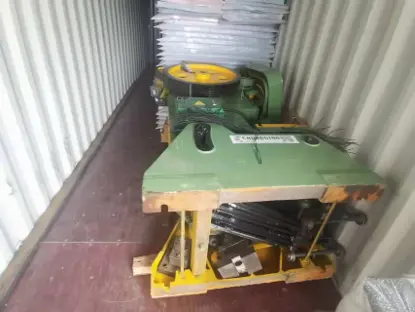
● transportation and After Sales Service
FYCHIS Maquinaria is one of the punch press machine manufacturers in China. FYCHIS Maquinaria dedicates to industrial automation system development and production, production and sales of sheet metal punch press machine etc. We can offer punch press machine for sale with punching capacity from 10 ton to 200 ton. Our advanced technology and perfect management system can ensure the high quality of punch power press machine. Our technical team can provide our clients with professional techinical service. In addition, we have professional freight forwarder with long-term cooperation to offer our clients good transportation service with low cost.
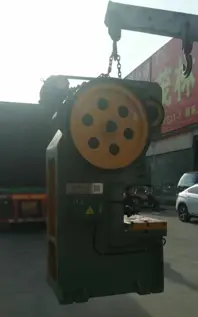
● punch press machine manufacturers
Our company is a source-strength manufacturer specializing in the R&D, production, customization and export of punch press machines. With more than 20 years of deep experience in machinery manufacturing, and based in Chongqing's industrial production base, we have a standardized production workshop, a complete processing and assembly line, and a professional R&D technical team. We provide domestic and overseas customers with various types of mechanical stamping equipment featuring high stability and high cost-effectiveness, and are a punch press source factory with a solid reputation in the industry.
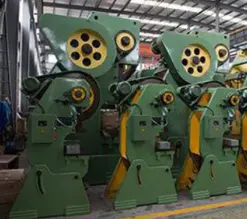
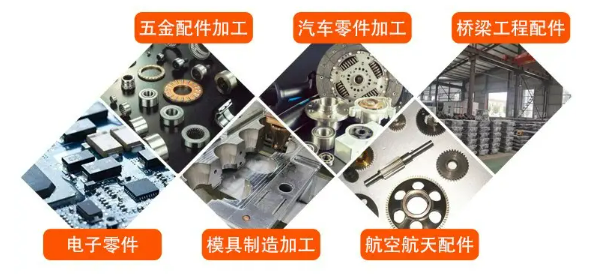
Our company specializes in the production and manufacturing of core punch press categories. Our main products include ordinary mechanical punch press machines, fixed-table / inclinable presses, and multi-tonnage industrial stamping equipment, with tonnage covering the full range from small precision stamping to large industrial forming stamping. The equipment can perfectly handle the full range of stamping processes such as metal sheet punching, blanking, bending, drawing, forming and trimming, and it’s widely used in various industries, for exaple, electric socket, horizontal shaft engine parts, cupboards, dishes, computer cases, household appliances, furniture, vehicles (cars, motorcycles, bicycles, tricyles and hardware parts etc.
As a professional punch press machine manufacturer, we master the core production processes of stamping equipment, with full-process independent control from frame casting and forging, overall precision machining of the frame, precision grinding of crankshafts and gears, die adaptation and debugging, to complete machine assembly. All punch press frames are made of high-strength integral cast iron, featuring strong rigidity and resistance to deformation. Combined with a precision transmission system and multiple safety protection structures, they offer core advantages such as stable operation, low noise, low failure rate, long service life, and easy operation and maintenance. At the same time, according to the customer's production scenario, we can provide personalized customization services for equipment tonnage, stroke, worktable size and automation configuration, and support OEM private-label production.
Our company has established a strict manufacturer-exclusive quality control system. Before leaving the factory, every punch press undergoes multiple no-load tests, load stamping tests, precision calibration and safety inspections, to prevent defective products from leaving the factory. All equipment complies with industry production standards and is equipped with complete factory inspection reports, operation manuals, and Chinese-English technical documentation. The precision, stability and safety of the equipment all pass strict quality inspection, ensuring long-term stable mass production for customers.
Relying on many years of foreign trade manufacturing and export experience, our punch press equipment has long been exported in batches to Peru, Colombia, Mexico, Bolivia and other South American countries. We are familiar with overseas market equipment standards and customer usage needs, and can provide one-stop foreign trade procurement services, including customized production, customs declaration and shipping, remote technical guidance, overseas after-sales maintenance, and regular supply of spare parts, so that customers at home and abroad can purchase with peace of mind.
● what is a punch press machine
punch press machine The full name is punch press, which is a type of mechanical equipment that uses pressure to cause plastic deformation or separation of metal sheets, thereby obtaining parts of the required shape and size. Its core working method is: a motor drives a slider to reciprocate up and down, an upper die is mounted on the slider, and a lower die is fixed on the worktable. When the slider presses down, the upper and lower dies close together and exert enormous pressure on the sheet material clamped in between, completing two types of processing: first, punching and separation (punching, blanking), and second, plastic forming (bending, drawing).
Main features Extremely high efficiency: one stroke can complete one or more processes, with dozens to hundreds of strokes per minute, suitable for large-batch production. Die-dependent: what shapes can be processed depends on the die. The die determines the precision and shape of the product, so die costs are relatively high. Widely used: the automotive, home appliance, electronics, hardware, and other industries use it extensively to manufacture housings, brackets, connectors, and so on.
Common classifications mechanical punch press machine: driven by a crank connecting rod, with a fixed speed, suitable for large-batch blanking and bending. hydraulic punch press machine: driven by hydraulics, with high and adjustable pressure, suitable for drawing, extrusion, and other processes requiring slow speed and high force. pneumatic punch press machine: driven by compressed air, mostly used in small-tonnage, high-frequency applications. Open-frame punch press: the body is C-shaped, open on three sides, convenient to operate, suitable for small and medium-sized parts. Closed-frame punch press: the frame is enclosed, with good rigidity, suitable for large and precision parts. High-speed punch press: extremely high stamping frequency and high precision, compatible with continuous dies for coil stock, aimed at small precision thin hardware parts. cnc turret punch press machine (CNC turret punch press): built in with multiple die stations, computer programming switches dies, suitable for thin-sheet sheet metal processing with many varieties and small batches.
There are many types of punch presses, so how should you choose?
I. Comparison of Applicable Scenarios for Various Types of Punch Presses
| Punch Press Type | Key Features | Suitable Applications | Not Recommended For |
| pneumatic hole punch press punching machine jh21 series | Good rigidity, fast‑speed, pneumatic clutch, large opening size, convenient die change | Punching, blanking, bending; mass production of motorcycle / ATV / agricultural hardware brackets and gaskets | Deep drawing of thick plates, extra‑large workpieces |
| J23 Open‑tiltable Punch Press | Cost‑effective, tiltable worktable for easy part unloading | Simple small parts, small gaskets & fixing plates for budget‑limited orders | Long‑term heavy‑load operation, high‑precision parts; low rigidity |
| hydraulic punch press machine | Constant pressure, adjustable stroke, large pressing force | Deep drawing, thick‑plate forming, reshaping & shell pressing | Mass‑production punching & blanking; low working efficiency due to slow speed |
| High‑speed Punch Press | Extremely high stamping frequency, high precision, equipped with coil progressive dies | Precision springs, terminals and small thin hardware parts | Thick plates, large‑size workpieces; high equipment cost |
| Closed‑gate Gantry Punch Press | Excellent frame rigidity, high deformation resistance, large tonnage | Stamping of large‑size thick plates and large frame sheet‑metal parts | Small‑size parts; large footprint and high price |
| cnc turret punch press machine | Multiple die stations, computer‑programmed, frequent die‑change free | Sheet‑metal cabinets with multi‑holes, small‑batch & multi‑variant sheet‑metal processing | Thick‑plate blanking, mass production of single‑variant parts |
II. 4-Step Quick Selection Method
Look at the process (priority) Punching / blanking / bending → JH21 mechanical punch press; drawing, forming, thick plate pressing → hydraulic press; precision small parts continuous production from coil stock → high-speed punch press.
Calculate the tonnage Calculate the punching force according to sheet thickness and shear perimeter, reserve a 30% margin when selecting the model, and do not use it at full tonnage for a long time.
Check the hard parameters (easy to make mistakes) Slide stroke, shut height, and worktable dimensions. The die must match these three items, otherwise the die cannot be installed.
Look at output and automation Small batch, manual loading and unloading: single basic punch press Medium batch: can be equipped with a simple feeding mechanism for semi-automatic production Large-batch coil stock production: punch press + material rack + leveler + feeder as a complete automated line Large-batch sheet production: can be combined with a sheet feeding manipulator to achieve automated operation
After selecting the punch press, how should the die be matched?
● hole punch die for press machine
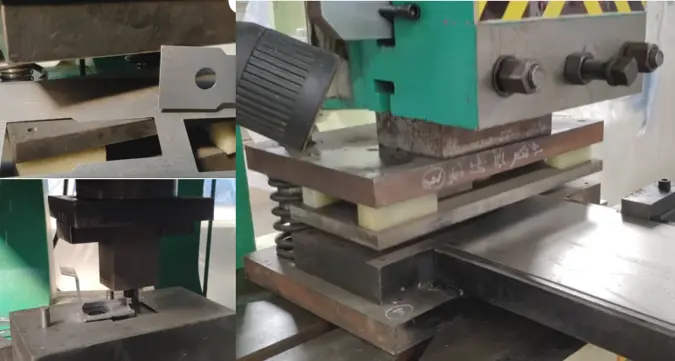
A punching die belongs to the blanking die category and is installed on a punch and press machine. Its function is to punch round holes, square holes and special-shaped holes in sheet metal. The hole obtained by punching is the finished product, and the small piece punched out is called waste (scrap / slug), which is the opposite of a blanking die (where the blanked part is the finished product).
Basic structure (the complete die set is divided into upper die and lower die)
Punch (punch head):upper die, actively cuts into the sheet metal and determines the inner diameter of the hole; available in circular, square, special-shaped, and small-hole sleeve types.
Die (die block):lower die, with a cutting-edge hole; waste falls downward through the die hole; a blanking clearance is reserved between punch and die.
Stripper plate (stripping plate):spring-driven, presses the sheet metal down first; on the return stroke, it scrapes the sheet metal off the punch to prevent the workpiece from sticking to the punch.
Guide components:guide pillar + guide bushing, to ensure alignment of the upper and lower dies and prevent edge galling.
Die shoe, fixing plate, backing plate, locating pin:for fixing, pressure bearing, and sheet metal positioning.
Working principle
The punch press machine slide drives the upper die downward, and the stripper plate first presses the sheet metal down;
The punch continues to press down, and the material undergoes shear tearing;
When the material has been cut into about 15%–30% of the sheet thickness, fracture separation occurs, and the waste falls through the die;
The slide returns, and the stripper plate strips the sheet metal off the punch, completing one punching cycle.
Die Classification
| Type | Features | Application Scenarios |
| Single‑operation Piercing Die | Piercing only in one stroke; simple structure and low cost | Small‑batch and simple parts; single punch for combined shearing‑punching machine |
| Compound Die | Completes piercing and blanking in one stroke | Gaskets and flanges with high positional accuracy requirements |
| Progressive Die | Strip‑fed material; multi‑station continuous piercing and forming | Mass‑produced sheet‑metal and electronic parts with high efficiency |
| Cam‑driven Side Piercing Die | Converts vertical reciprocating motion into horizontal motion via cams | Side‑wall piercing for tubular and bent parts |
Commonly used die materials (punch / die block)
Cr12MoV / SKD11:the most universal, HRC 58–62, for Q235 and ordinary carbon steel medium-thick plate; the first choice for cost-effectiveness.
DC53:better toughness than Cr12MoV, for stainless steel and small holes prone to edge chipping.
SKH-9 (M2 high-speed steel):for high-frequency stamping and stainless steel, with longer service life.
Cemented carbide (tungsten steel YG8):super wear-resistant, for large-batch thin plate; highly brittle, with high requirements for press rigidity.
Optional TiN/TiCN coating to reduce material sticking and extend service life for stainless steel and aluminum plate.
Core parameter: blanking clearance (unilateral clearance)
Clearance = sheet thickness × clearance coefficient, which directly determines burr size, cutting-edge life and blanking force.
Low-carbon steel Q235: 7.5%–10% of sheet thickness (unilateral)
Stainless steel: 10%–12.5%
Aluminum / copper: 5%–7.5%
Clearance too small: secondary shearing, heat generation and material sticking, punch prone to chipping; clearance too large: large burrs, waste tearing, slug jumping.
Simplified blanking force formula:F = L × t × τ L = punching perimeter, t = sheet thickness, τ = material shear strength.
● punch press machine safety
punch press machine is a high-risk stamping device, and improper operation can easily cause crushing and shearing injuries, so safety regulations must be strictly followed.
I. Checks before starting up Check whether the emergency stop button and safety guardrail / photoelectric protection device are intact and effective. Check the clutch and brake for abnormalities, and confirm that the dies are fastened and not loose. Clear the worktable and remove tools, waste and other debris. Confirm that the equipment is properly lubricated, and run it no-load 2–3 times to observe for any abnormal noise. punch press machine operator} must wear labor protection equipment; loose clothing and jewelry are prohibited, and long hair must be tucked into a work cap.
II. Safety during operation (most important) It is strictly forbidden to put hands into the dangerous area of the dies. For small workpieces, use special tools such as tweezers, suction cups and hooks to feed and remove parts. When debugging, installing or removing dies, or clearing jammed material, the power must be cut off and the machine stopped. Only place one workpiece at a time; stacked stamping is prohibited; overload and off-center processing are prohibited. While the machine is running, no part of the body may cross the safety guard. If material jamming, abnormal noise or vibration occurs, immediately press the emergency stop, cut off the power before troubleshooting, and never force the machine to start. When multiple people work together, a unified signal must be agreed upon to prevent accidental triggering.
III. Equipment maintenance and wrap-up For maintenance and repair, the power supply must be cut off and a warning tag hung. At the end of production, turn off the power, clear waste, and keep equipment inspection records. Safety protection devices must not be removed or bypassed at will.
IV. Prohibited behaviors
❌ Removing or bypassing safety protection or photoelectric protection
❌Putting hands directly into the die area to place or remove workpieces
❌Reaching in to clear waste while the equipment is running
❌ Operating the punch press while fatigued or after drinking
❌Untrained personnel operating independently
● Punch press machine operator
Job Responsibilities
Before operation: Check the punch press clutch, brake, emergency stop button and safety protection devices; check whether the dies are securely fastened; run the machine no-load 2–3 times; ensure proper equipment lubrication; and clear debris from the worktable.
Production operation: Place sheet material according to drawings / process requirements, and use auxiliary tools such as tweezers and hooks to feed and remove workpieces; it is strictly forbidden to put hands into the dangerous area of the dies.
Process management: If abnormalities such as unusual noise, vibration or loose dies are found, immediately stop the machine, cut off the power and report; operation with faults is prohibited; overload and off-center stamping are not allowed; clear waste in a timely manner.
Wrap-up work: At the end of production, cut off the power, clean the punch press and workstation, carry out routine equipment maintenance, and fill in production records.
Job Requirements
Only take up the post after passing professional safety training, and be familiar with the structure of the punch press and safe operating procedures.
Be able to read simple processing drawings and use basic measuring tools such as vernier calipers.
Strictly comply with safety regulations, stay focused, and strictly prohibit violations of operating rules.
● FREQENT ASKED QUESTIONS
The reasons for vibration in a mechanical punch press and their corresponding solutions are as follows:
1, Imbalance: Imbalance of components such as the flywheel or crankshaft can cause vibration during operation. The solution is to adjust or rebalance the relevant punch press machine parts.
2, Misalignment: Improper alignment of parts such as the die, punch, or guide rod can lead to vibration. The solution is to ensure proper alignment of these components and tighten them securely.
3, Wear or damage: Excessive wear or damage to punch press machine parts like bearings, gears, or belts can result in vibration as they may not function properly. The solution is to regularly inspect and replace worn or faulty parts.
4, Insufficient machine rigidity: Inadequate rigidity of the machine can cause vibration. The solution may involve increasing the machine's rigidity through reinforcing the structure or using a more stable base.
5, Excessive punching load: If the workpiece is too large or the impact load applied during the punching process is too high, it can lead to vibration. The solution is to adjust the working parameters of the punch press appropriately to operate within the recommended load range.
6, Cooling system issues: Malfunctioning or insufficient cooling systems can result in increased temperature, leading to vibration. The solution is to ensure the cooling system is operating properly and perform maintenance and cleaning as required.
7, Control system issues: Faulty control systems or improper operation by untrained personnel can cause vibration. The solution is to ensure the control system is functioning correctly and provide training to operators on proper operation.
To address vibration issues in a sheet metal punch press machine, implement the aforementioned solutions based on the specific situation. Additionally, regular maintenance and inspections should be conducted to ensure the stability and proper functioning of the punch press.