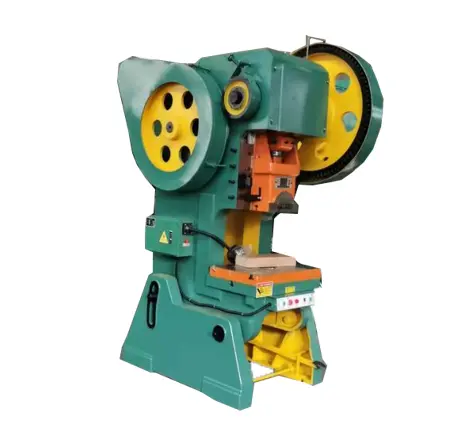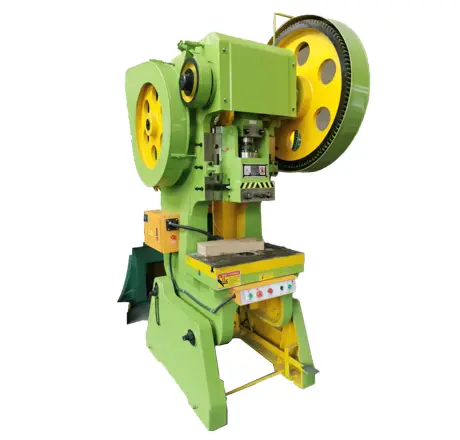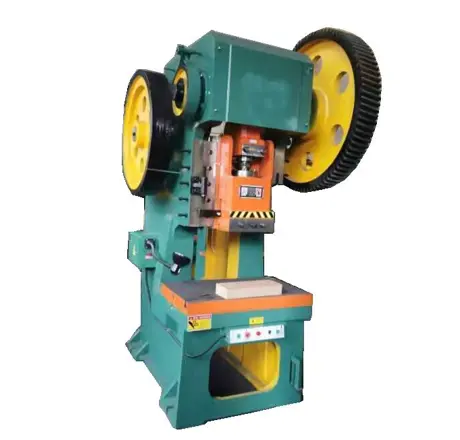



Mechanical punch press machine
Punching Capacity: 100t
Mechanical punch press price: 9000 dollars
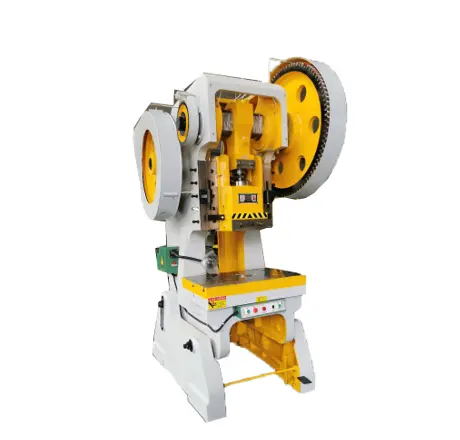
● Advantages of mechanical punch press
- the mechanical punch press machine offers 100 tons to do the punching work.
- Compared with traditional machining, the mechanical punch press for sale saves materials and energy and has high efficiency.
- the mechanical punch press can make products that cannot be produced by mechanical processing by using various dies and the cost is low.
● Specification Of Mechanical Punch Press
| Nominal Force(ton) | 100 |
| Nominal Stroke(mm) | 120 |
| SPM (times/min) | 45 |
| Die Height Adjustment(mm) | 50 |
| Between Slide Center and Frame(mm) | 320 |
| Bolster(mm) | 900*600mm |
| Blanking hole diameter(mm) | 290mm |
| Main Motor Power | 380v trifasico.7.5KW |
| Outline Dimension(mm) | 1400*1800*2650mm |
| Net Weight(kgs) | 5100kgs |
● SHIPPING
We have own professional agent, we can ship the machine in full container load and less than container load. Our good service and good price have satisfied many customers.
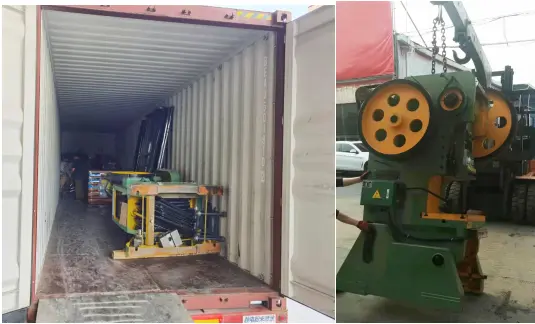
Our company has a professional mechanical punch press technical team, which can provide you with mechanical punch press and suitable solutions for your products, provide inspection and maintenance plans, and provide spare parts and accessories for the machine.
● Punch press machine manufacturer
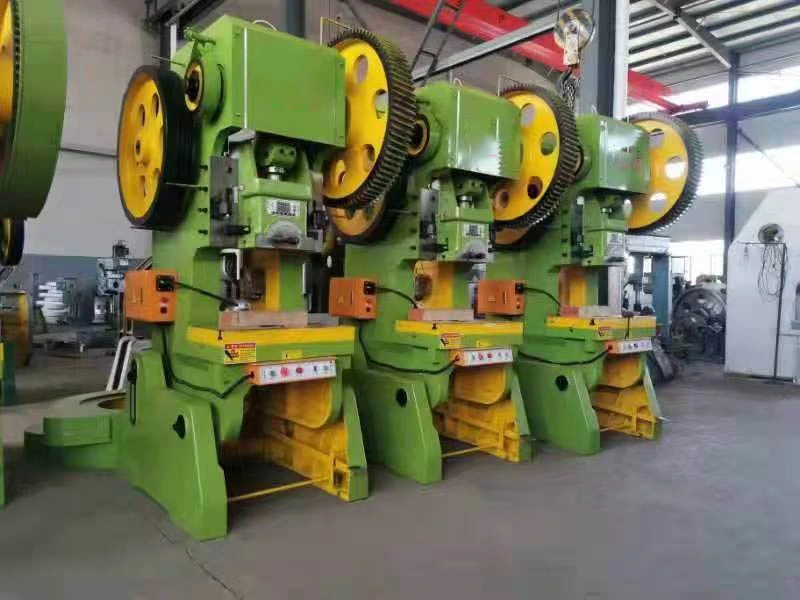
Chongqing Popular Power Mechanical Electrical Co., Ltd. is an export-oriented industrial and commercial enterprise specializing in the export of electromechanical equipment to the Latin American market; the stamping press (press machine) is a new main export category. The company has a professional team for selection, quality control, and foreign trade; the presses are produced by domestic factories specializing in stamping equipment, customized according to our technical standards and export regulations, with comprehensive inspection of the machine before being exported under our own brand. I. Scope of Press Products Conventional C-frame open-type stamping presses can be offered, pneumatic punch press machine}, with an optional servo version. Tonnage coverage: from small to medium tonnage mechanical punch press machine}. Complementary options: photoelectric safety light curtain, motorized die adjustment, automatic lubrication, automated feeding and leveling line, quick die change device. Export adaptation: CE certification can be processed; voltage customization for South America 110V/220V is supported; operation manual in Spanish, parts list, and maintenance documentation can be provided. Customization capability: non-standard requirements such as greater throat depth, special worktable dimensions, customized shut height, etc.
● Punch press machine price
| Tonnage | Common Model | Reference Price in USD (FOB) |
| 20~25 tons | Open‑tilting Type J2-25 | $2000 ~ $3000 |
| 40 tons | J2-40 | $3000 ~ $5500 |
| 63 tons | J23‑63 | $4000 ~ $5500 |
| 80 tons | J23‑80 | $6800 ~ $8000 |
| 100 tons | Mechanical press J23-100 | $6000 ~ $14000 |
● Factors influencing the punch press machine price
Model type and nominal tonnage (the most fundamental factor)
1.Tonnage: the higher the tonnage, the greater the amount of material in the body, crankshaft, gears, and motor, and the higher the cost; within the same series, each increase of one tonnage level notably raises the price. Structural form: C-type open (the most economical) → one-point / two-point closed → portal frame; rigidity increases progressively and the price rises considerably.
2.Drive type: conventional mechanical flywheel press (low price) > pneumatic punch press machine > servo press (the most expensive; programmable speed / stroke / pressure); the high-speed precision press is much more expensive than the common punch and press machine}; the hydraulic press has an independent pricing system.
3.Body material, machining process, and precision level
Material: integral HT300 casting + aging treatment, the best rigidity and high price; common welded steel body, more economical; low-quality thin sheet metal body, the cheapest but with insufficient rigidity.
4.Precision: common level, precision level, high-speed level, and ultra-precision. The higher the precision, the greater the requirements for grinding on guides, crankshaft, and slide; the price difference can exceed 30%. Key parameters: worktable dimensions, throat depth, slide stroke, die height, number of strokes per minute; the larger / higher, the greater the cost.
5.Brands of main components (enormous price differences) Clutch, bearings, motor, PLC, numerical control system: imported brands (Fanuc, Siemens, etc.) > first-tier domestic quality > unknown-brand components.
6.Servomotor, encoder, pneumatic elements, oil pump: imported components notably raise the quotation of the complete machine. Transmission pairs, gears, copper bushings: forged and ground parts > common cast parts; they directly affect service life and price.
7.Automation options and additional configurations The basic bare machine is the most economical; adding the following configurations increases the price: Pneumatic balance cylinder, forced automatic lubrication, motorized slide adjustment; Photoelectric safety light curtain, photoelectric protection, two-hand operation, emergency stop safety system; Feeder, coil reel, leveler, robot/manipulator, quick die change system; Intelligent modules such as numerical control, touch screen, MES interface for data collection.
8.Brand, origin, and certifications Imported brands (Japanese, Taiwanese, etc.) have the highest surcharge; large first-tier domestic manufacturers (Yangli, Yangduan, Jinfeng of domestic production); medium and small domestic manufacturers; small workshops; the price difference for the same tonnage can reach 2 to 3 times. Export orders require CE certification, which adds testing and costs; common models for the domestic market do not have that expense.
9.Customization requirements Non-standard customization generates significant surcharges: greater throat depth, special shut height, enlarged worktable, special stroke, dedicated use for hot forging / hot upsetting, anti-corrosion, special voltage (110V/220V for foreign trade), etc.; all are concepts that increase the price due to customization.
● use of punch press machine
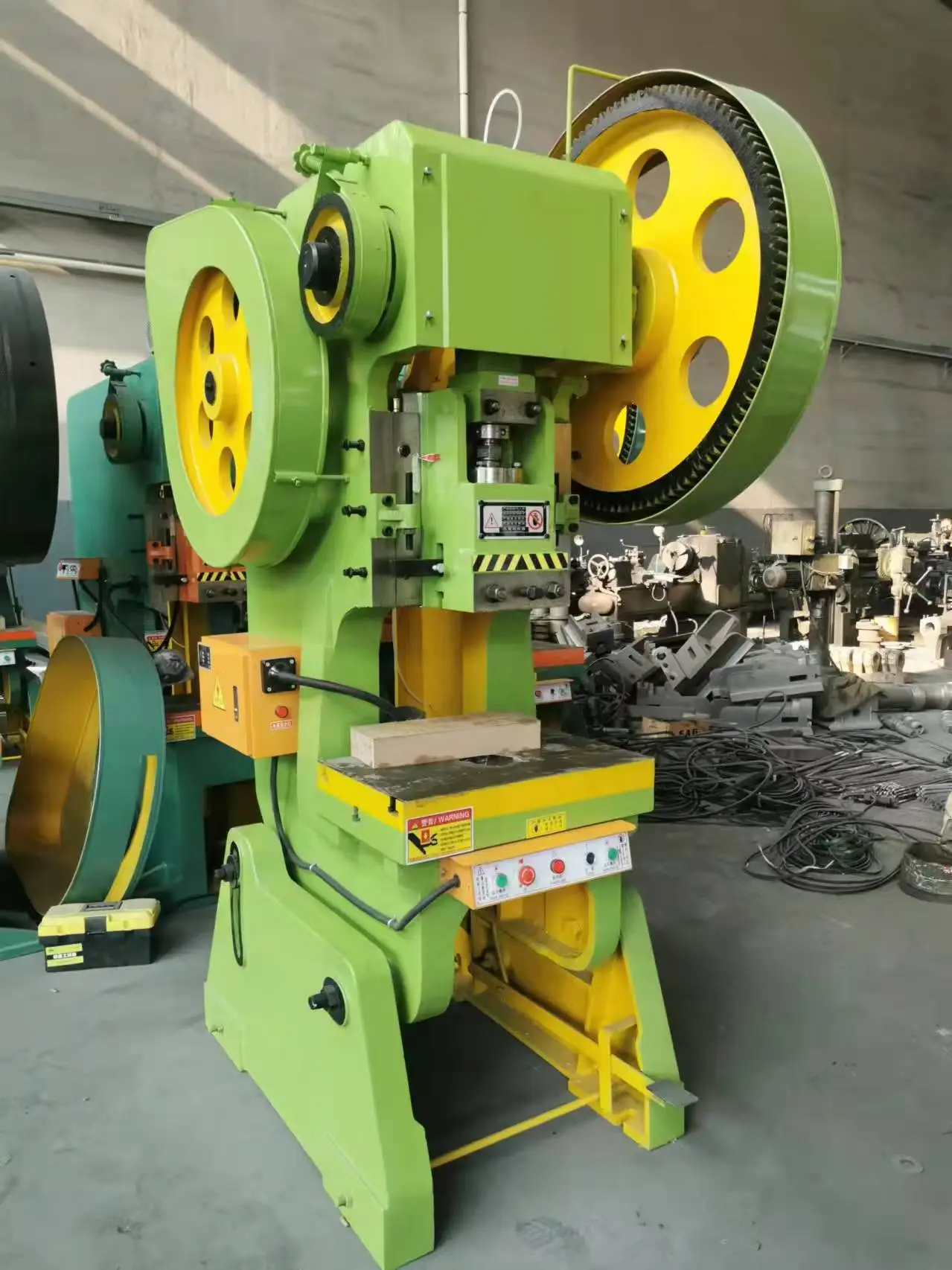
The punch and press machine} is a mechanical device that uses a hole punch die for press machine to apply pressure to the material (mainly metal sheet), causing its plastic deformation or separation, in order to obtain parts of the required shape and dimensions.
Its application is very broad and its main uses can be summarized into four major categories of processes: cutting/stamping, bending, deep drawing, and forming. The specific applications are reflected in the following aspects:
Cutting/stamping (separation processing)
It is the most basic use of the press; by means of the die, the sheet is made to separate along a determined contour.
Punching/trimming of parts: flat parts with the desired shape are obtained, such as circular or square washers. Piercing: holes are punched in the sheet, such as the slots in the silicon steel laminations of motors or the mounting holes in sheet metal parts. Trimming/deburring: excess material is removed from the edges of deep-drawn or formed parts. Cutting: strips or bands of material are cut to the desired length.
Bending (forming processing) It consists of bending the sheet at a determined angle or shape. Manufacture of U-shaped, V-shaped, and Z-shaped parts, such as brackets, clamps, and folded edges of electrical appliance housings.
Common in hinges, clips, connectors for metal furniture, etc. Deep drawing (forming processing) It consists of transforming a flat disk into an open hollow part.
Manufacture of cup-shaped, box-shaped, or cylindrical parts, such as the body of aluminum cans, battery housings, motor housings, basins, and automobile body parts.
It can be combined with multiple deep drawing and ironing deep drawing to obtain deep tubular parts or precision thin-walled parts.
Ribbing/embossing: increases rigidity or serves for positioning the part, such as reinforcing ribs and raised points on sheet metal parts.
Flattening/straightening: improves the flatness and dimensional accuracy of the part. Relief stamping/coining: engraves texts, figures, or increases local density on the surface.
Typical applications by industry
Automotive manufacturing: body parts, chassis structural components, brake pads, gear blanks, etc.; large multi-station presses and high-speed presses are widely used. Electronics and home appliances: silicon steel laminations for motor stators and rotors, connectors, shielding covers, cabinets and enclosures, heat sinks. Hardware and daily-use items: cutlery, pots, locks, zippers, buttons, commemorative medals.
Aerospace: instrument panels, connectors, skin parts (precision stamping is usually employed).
Construction and home appliances: ventilation ducts, refrigerator and air conditioner housings, internal drums of washing machines, etc.
Coordination with other processes The punch press machine is usually combined with automatic feeding, progressive dies, and multi-station dies to achieve efficient, high-volume production. It can also be used in powder metallurgy compression forming, plastic deburring, etc.
● FREQENT ASKED QUESTIONS
Main parts of mechanical punch press and its functions
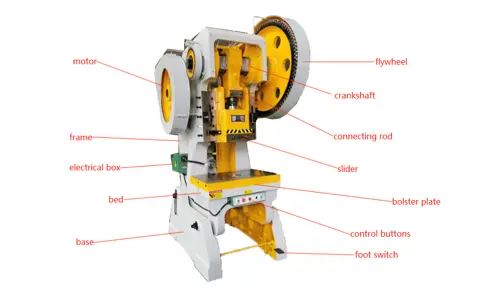
The mechanical punch press can be used to produce many products and its structure is very simple, thus the mechanical punch press is a machine commonly used in production. The main parts of the mechanical punch press machine include:
1, Frame: The frame provides the structural support for the entire machine. It must be rigid and sturdy to withstand the forces generated during the punching process.
2, Bed: The bed is a flat surface where the workpiece is placed for punching. It is typically made of cast iron or steel and provides a stable base for the punching operation.
3, Ram: The ram, also known as the slide, is the moving part of the machine that delivers the punching force to the workpiece. It is guided by the frame and moves up and down.
4, Clutch and Brake: These components control the motion of the ram. The clutch engages and disengages the power transmission from the motor to the flywheel, while the brake stops the motion of the ram when needed.
5, Flywheel: The flywheel is a heavy rotating wheel connected to the main drive shaft. It stores and regulates energy to provide a smooth and consistent punching action. The rotational inertia of the flywheel helps maintain a constant speed during operation.
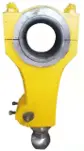
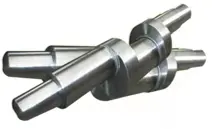
6, Motor of mechanical punch press. the motor converts electrical energy into circular motion of the flywheel. the flywheel of the mechanical punch press is driven by the motor in a circular motion and transmits the circular motion to the clutch and gears. And the punch press mechanical clutch transmits the circular motion to the crankshaft. One end of the connecting rod is connected to the crankshaft, and the other end is connected to the slider. the connecting rod moves with the crankshaft and this movement becomes the up and down movement of the slider.

7, Punch Holder: The punch holder securely holds the punch tooling, which includes the punch and die. It allows for easy replacement of tooling depending on the punching requirements.
8, Control System: This includes various controls and switches to operate and monitor the machine. It may include features such as an emergency stop button, control panel, and safety mechanisms.
9, Lubrication System: A punch press machine requires lubrication to reduce friction and prevent wear on moving parts. The lubrication system ensures smooth operation and extends the lifespan of the machine.
10, Safety Features: Punch press machines are equipped with safety mechanisms to protect operators from accidents. These can include safety guards, light curtains, and interlocks that prevent operation when safety conditions are not met.
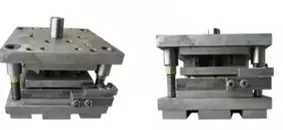
11, Die punch press machine: Dies are very components of the mechanical punch press machine. to finish the punching work two dies are are required. the upper die is fixed on the slider with screws and moves up and down with the slider and the lower die is fastened on the bolster plate. The piece of metal is placed on the lower die and the upper die hits the metal and the lower die when the upper die comes down. the design and production of the upper and lower dies are determined according to the shape of the product to be produced.