




Engineering Plastics for Molds: PA, POM, PBT, TPU and Glass-Filled
Engineering resins cost more than commodity plastics and demand more from the tool: they absorb moisture, they shrink differently, they wear gates and screws, and some of them run hot enough to change your steel choice. This page covers pa plastic injection mold selection (PA6 and PA66), pom acetal injection molding, PBT and PET, TPU and TPE, glass filled plastic molding, and the multi-material, overmolding and insert-molding work that engineering resins make possible. For the broader picture of structure and buying, start with our plastic injection mold hub page .
| PA6 / PA66 shrinkage | 0.8–2.0%, directional |
|---|---|
| POM shrinkage | 1.8–2.5%, stable in service |
| Glass-filled | 0.3–0.8%, anisotropic |
| Dry to | <0.1–0.2% for PA and PBT |
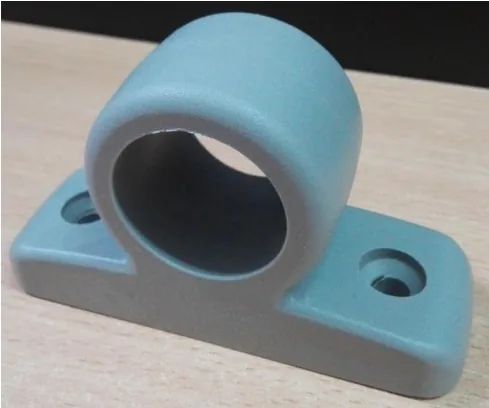
1. PA6 and PA66: Moisture, Shrinkage, Gating
Nylon (PA6 and PA66) is the most widely used engineering resin: gears, brackets, housings, connectors, and any part that needs strength and toughness at moderate cost. A pa plastic injection mold is common in consumer goods, power tools, and automotive under-hood parts.
PA moisture and drying before it fills is the first problem to solve. Nylon absorbs moisture from the air aggressively; wet resin hydrolyzes at melt temperature, and the part shows silver streaks, weak weld lines, and reduced impact strength. PA6 and PA66 must be dried to below roughly 0.1–0.2% moisture before molding, and the drying hopper must be sized for the throughput, not just the shot weight.
Shrinkage is the second problem. PA6 shrinks 0.8–1.5%, PA66 shrinks 1.0–2.0%, and glass-filled grades shrink less (0.3–0.8%) but anisotropically — different along flow than across flow. Pa plastic parts injection mold designs must compensate directionally, and consumer goods pa plastic injection mold tools often need trial adjustments on critical dimensions.
Gating matters too. PA flows well but is sensitive to shear; small gates cause high shear and weak parts. Painted pa plastic injection mold parts need a gate location that does not leave a witness mark on the painted surface, and consumer goods pa plastic injection mold work often uses a hot runner drop to keep the gate off the visible face.
2. POM Acetal: Dimension Stability and Machining
POM (acetal) is the dimensionally stable engineering resin: gears, bearings, conveyor components, and precision mechanical parts. Pom acetal injection molding produces parts with low friction, high stiffness, and excellent machinability after molding.
POM shrinks 1.8–2.5% and is semi-crystalline, so cavity compensation matters. But POM's advantage is that it holds tolerance well after molding — it does not absorb moisture like PA, so dimensions stay stable in service. PBT and POM for connectors and gears is a common pairing: POM for gears and mechanical parts, PBT for electrical connectors.
POM is sensitive to overheating: hold the melt too hot and it depolymerizes, releasing formaldehyde and corroding the tool. Use corrosion-resistant steel (S136) for POM tools that run hot, and control residence time. If you are comparing POM against commodity resins for a cost-sensitive part, our pp, abs, pc plastic selection page explains where PP or ABS can substitute and where they cannot.
3. PBT and PET: Electrical Parts
PBT and PET are the electrical and electronic resins: connectors, bobbins, switches, and sensor housings. Pbt and pet: electrical parts work benefits from PBT's good electrical properties, dimensional stability, and fast crystallization.
PBT shrinks 1.5–2.0% unfilled, 0.3–0.8% glass-filled. It flows well, fills thin walls, and molds fast — but it is sensitive to moisture (hydrolyzes like PA) and to long residence time. Glass-filled PBT is abrasive; see the glass-filled section below.
PET is similar but more sensitive to processing; it is used where clarity or specific electrical properties matter.
4. TPU and TPE: Soft Touch and Overmolding
Tpu plastic injection mold and tpe plastic injection mold work covers soft-touch grips, seals, cable jackets, and overmolded handles. TPU is the tougher, more abrasion-resistant choice; TPE is softer and easier to process.
TPU shrinks 0.5–2.0% depending on hardness, and 70 shore d injection mold plastic grades are at the harder end — they flow less readily and need generous gates and runners. Wear resistant tpu plastic injection mold work requires abrasion-resistant steel in the gate area.
TPU and TPE are the gateway to multi-material work: they are often overmolded onto a rigid substrate (PP, ABS, PA) to produce a soft grip on a hard body. That is where the next section picks up.
5. Glass-Filled Grades: Wear on Gates and Screws
Glass filled plastic molding is where the tool pays for the resin's performance. Glass fibers — typically 15–50% by weight — raise stiffness, reduce shrinkage, and improve heat resistance. They also abrade the gate, the runner, the screw, and the barrel.
Glass-filled grades: wear on gates and screws means the tool needs harder steel: H13 or S136 for the cavity and core, hardened gate inserts, and a bimetallic screw and barrel in the machine. A P20 tool running 30% glass-filled PA will show gate wear within tens of thousands of shots. Highstrength multi material plastic injection mold work with glass-filled resins needs the same steel upgrade.
The four upgrades glass-filled work forces
- Cavity and core steel. H13 for toughness and wear resistance, S136 where corrosion joins the wear problem. Pre-hardened P20 is the wrong default here.
- Hardened gate inserts. The gate takes the highest shear and the highest fiber concentration; make it a replaceable hardened insert, not a feature cut into the cavity block.
- Bimetallic screw and barrel. Machine wear is as real as tool wear, and a worn screw shows up as shot-to-shot weight variation.
- Directional shrinkage. Glass-filled PA66 may shrink 0.3% along flow and 0.8% across flow — compensate per direction and expect warpage if cooling is unbalanced.
6. Multi-Material, Overmolding and Insert Molding
The largest group of searches around engineering resins is not about a single resin — it is about multi material plastic injection mold work: two-shot molding, overmolding, insert molding, and multi-color parts. This is a distinct tool category, not a variation of a single-resin tool.
Two-shot and multi-color
A twoshot multi material plastic injection mold runs two resins in one cycle on a dedicated machine, producing a bonded two-color or two-material part with no assembly. A twoshot overmolding multi material plastic injection mold combines two-shot with overmolding — a soft TPE over a rigid substrate in one cycle. Multicolor multi material plastic injection mold work for power tools and consumer products is a common application (powertool multicolor multi material plastic injection mold).
Overmolding
An overmolding plastic injection mold molds a second resin over a pre-molded substrate. Overmolding multi material plastic injection mold tools are often simpler than two-shot tools because they run on a standard press with two separate molds.
Insert molding
An insertmolding multi material plastic injection mold places a metal or plastic insert in the cavity before injection. Insertmolding highstrength multi material plastic injection mold work is used for threaded inserts, electrical terminals, and structural reinforcements. 6 insert multi material plastic injection mold and 8 cavity multi material plastic injection mold layouts are common when several inserts go into one part.
Table 1 · Three multi-material processes, tool by tool
| Process | Machine | Tool complexity | Volume tier | Main constraint |
|---|---|---|---|---|
| Two-shot / multi-color | Dedicated two-shot press, rotating platen or core-back | High: two cavities, matched shrink, precise shutoff | 200k shots typical | Bond between the two resins |
| Overmolding | Standard press, two separate molds | Medium: substrate locating and clamping | Batch to mass production | Substrate prep and re-fixturing |
| Insert molding | Standard press, manual or robot loading | Medium: 6 or 8 cavity insert layouts | High volume | Insert shift and flash on metal |
Tool requirements
Multi-material tools need precise shutoff between the two materials, matched shrinkage, and often a rotating platen or a core-back mechanism. 3 plate multi material plastic injection mold designs are used when gate location must be away from the cosmetic surface; hotrunner multi material plastic injection mold and hotrunner multicavity multi material plastic injection mold designs are used for high-volume two-shot work. 250t multi material plastic injection mold and 300t overmolding multi material plastic injection mold refer to the press tonnage needed — two-shot tools are heavier and need more clamp force than single-material tools.
Surface and durability
Mirrorpolished multi material plastic injection mold and cncprocessed polished multi material plastic injection mold work is specified for cosmetic multi-color parts. Nitrided multi material plastic injection mold and nitrided durable multi material plastic injection mold surface treatments improve wear resistance on sliding shutoffs. Corrosionresistant multi material plastic injection mold steel is needed when one of the resins is corrosive (PVC, flame-retardant grades). Wearresistant multi material plastic injection mold and stable multi material plastic injection mold designs are specified for high-volume production.
Production scale
Prototype multi material plastic injection mold, batch multi material plastic injection mold, massproduction multi material plastic injection mold, and highvolume accurate multi material plastic injection mold describe the volume tier. 200k shot multi material plastic injection mold is a typical life target for a production two-shot tool. 2 cycle multi material plastic injection mold refers to a two-cycle (two-shot) process. 5 axis multi material plastic injection mold machining is used for complex shutoff surfaces.
Material handling and feedstock
Molten plastic injection into mold and molten plastic injection mold describe the basic process; injection mold plastic pellets and plastic mold injection pellets are the feedstock. Plastic injection mold material and mold material for plastic injection are broad terms — always specify the resin grade, not just "plastic".
Consumer and food applications
Consumer multi material plastic injection mold and consumer complex multi material plastic injection mold work covers grips, housings, and appliances. Food safe plastic injection mold and hight temp food safe injection mold plastic require FDA-compliant resins and a tool that can be cleaned. Is injection mold plastic dishwasher safe depends on the resin, not the mold — PP and PC are generally dishwasher-safe, PS is not.
Silicone is a different process, not a cheaper injection tool. Silicone mold for plastic injection and silicone plastic injection mold are used for low-volume casting — no injection unit, no steel cavity, no cycle time worth quoting. Do not confuse them with a production plastic injection mold when you are pricing a program.
7. Drying, Regrind Limits and Cost Impact
Drying, regrind limits and cost impact is where engineering resins differ most from commodity resins. PA, PBT, PET, TPU, and PC all absorb moisture and must be dried before molding. The dryer must be sized for the throughput and the resin's drying curve — PA6 needs roughly 4 hours at 80–100°C, PA66 similar, PC needs 3–4 hours at 120°C.
Table 2 · Shrinkage, drying, regrind and steel by resin
| Resin | Shrinkage | Drying | Regrind | Tool grade note |
|---|---|---|---|---|
| PA6 | 0.8–1.5% | 4 h @ 80–100°C | 10–20% | P20 / 718; S136 if hot or corrosive |
| PA66 | 1.0–2.0% | 4 h @ 80–100°C | 10–20% | As above, watch gate shear |
| PA + 30% GF | 0.3–0.8%, anisotropic | 4 h, dry air preferred | under 10% | H13 or S136, hardened gate insert |
| POM | 1.8–2.5% | 2–3 h @ 80–90°C | up to 20% | S136 for hot-running tools |
| PBT | 1.5–2.0% (0.3–0.8% GF) | 2–4 h @ 120°C | 10–20% | Hardened gate; H13 if GF |
| PET | 1.5–2.0% | 4 h @ 120–140°C | limited | Corrosion-resistant steel |
| TPU / TPE | 0.5–2.0% by hardness | 2–4 h @ 80–100°C | low share | Wear-resistant gate area |
| PPS / LCP | 0.3–1.0%, LCP anisotropic | 3–4 h @ 150°C | low share | Tight shutoff, H13 |
| PEEK | 1.0–1.5% | 3–4 h @ 150°C | low share | H13 premium, mold at 180–200°C |
Regrind limits are resin-specific. PA and PBT tolerate limited regrind (typically 10–20%) before properties degrade; glass-filled grades tolerate less because the fibers break down. Regrind that is not dried reintroduces moisture, so regrind handling is part of the drying plan.
Cost impact: drying adds energy and time, regrind limits add material cost, and both are often underestimated in quotations. A plastic injection mold cost estimate that ignores drying and regrind is incomplete.
Two line items that quietly decide your unit cost. Dryer capacity and regrind percentage never appear on a mold quotation, yet they set scrap rate and cycle time. Ask for both on the trial report, not after the first production lot fails.
8. PPS, LCP, PEEK and High-Heat Resins
PPS flash tendency and LCP anisotropy at the gate are the two high-heat resin problems that change tool design. PPS flashes easily because it flows well at high temperature; the tool needs tight shutoffs and precise parting-line fit. LCP is highly anisotropic — it shrinks very differently along flow than across flow — so gate location and flow orientation must be designed around the final part dimensions.
PEEK and high-heat resins: mold temperature and steel choice is the other high-heat issue. PEEK needs mold temperatures of 180–200°C, which means the tool needs heater cartridges, insulation, and a steel that holds hardness at temperature (H13 or a premium grade). How hot is injection mold plastic depends on the resin: commodity resins run at 200–280°C melt, engineering resins at 250–320°C, and high-heat resins above 350°C.
- PPS. Flows far at high temperature — tight shutoff, precise parting line, expect flash at every vent if the fit is loose.
- LCP. Shrinkage is strongly directional; the gate and flow direction are a dimension decision, not a cosmetic one.
- PEEK. 180–200°C mold temperature, heater cartridges and insulation in the tool, H13 or premium steel that keeps hardness hot.
- Melt temperature band. Commodity 200–280°C, engineering 250–320°C, high-heat above 350°C — this band is what sizes the heater, the steel and the cooling.
- Read the recommended mold temperature. Start from the resin data sheet, not from what the press can hold today.
- Check the controller. Above about 90 °C, water temperature control stops being enough; oil units, electric or induction heating take over.
- Check the tool. Insulation and thermal expansion compensation have to be designed in before the steel is cut.
Order matters. Reverse it and the money goes to the wrong fix — a hotter controller on a tool that cannot hold the temperature, or a new insert on a press that never reaches it.
9. Where to Go Next
If you are selecting an engineering resin, send us the part function, temperature, chemical exposure, and volume — we will recommend a resin and the tool implications that go with it. For abrasive and high-heat resins, our injection mold steel page explains how steel grade changes with the resin; for a comparison against commodity resins, see our pp, abs, pc plastic selection page. For the full picture of structure, types, companies and buying, return to our plastic injection mold hub page.
Send the part, get the resin and the tool plan. Part function, service temperature, chemical exposure, wall thickness and annual volume. You get a resin recommendation with drying spec, shrinkage compensation, steel grade and the process type — single shot, two-shot, overmolding or insert.
Start the quote on WhatsApp (+86 191 1290 5173) or email 877657530@qq.com
All 34 pages in this injection mold guide
Foundations and design
- Hub: types, structure, companies
- Mold types, pros and cons
- Design service and workflow
- Mold flow analysis and 3D design
- Gate, runner, cooling, ejection
- Mold steel, aluminum and copper
- Commodity plastics: PP, ABS, PC
- Machine selection and clamp tonnage
Cost and delivery
- Cost breakdown
- Price range, quote, lead time
- Prototype and low volume
- Quality, precision, defects
- Cleaning, maintenance, repair
- Custom mold: drawing to T1
Sourcing and supply
- Tooling service: CNC, EDM, tryout
- Manufacturers and maker directory
- Factory layout and audit
- Suppliers and exporters
- China supplier and export
- China custom OEM / ODM
- Import, HS code and duty
By industry
- Medical
- Electronics
- Refrigerator and white goods
- Small appliance and houseware
- Automotive interior and exterior
- Automotive engineering plastics
- Motorcycle plastics
- Packaging, crate, pallet
- Cup, cutlery, container
- Furniture and chair
- Industrial, agricultural, construction
- Machine tonnage and fit
- Product cases: spoon, stopper, cup, sensor
Talk to the factory
WhatsApp and email reach the same team that cuts the steel, not a trading desk. Send the 3D file, the annual volume and the resin grade, and you get a quote with cavity count, steel and lead time.
- WhatsApp: +86 191 1290 5173
- Email: 877657530@qq.com
- Mold catalogue in English: Injection molds built in Chongqing · Catálogo en español