




Mold Cleaning, Maintenance, Repair and Life Expectancy
You bought a mold, but nobody told you how often to clean it, what to clean it with, or who pays when it fails. We wrote this guide to give you a maintenance standard you can put into practice directly: cleaning frequency, cleaning-agent selection, rust and water-line care, polishing and release upkeep, weld repair, life expectancy and the repair-or-replace decision, and the warranty boundary. The thread running through all of it is simple — maintenance is not a cost, it is how you extend life and cut downtime.
| Frequency tiers | Daily · weekly · shutdown |
|---|---|
| Cleaner choice | By steel grade and coating |
| Minimum checklist | Four items, signed |
| Replace when | Repair cost per shot wins |
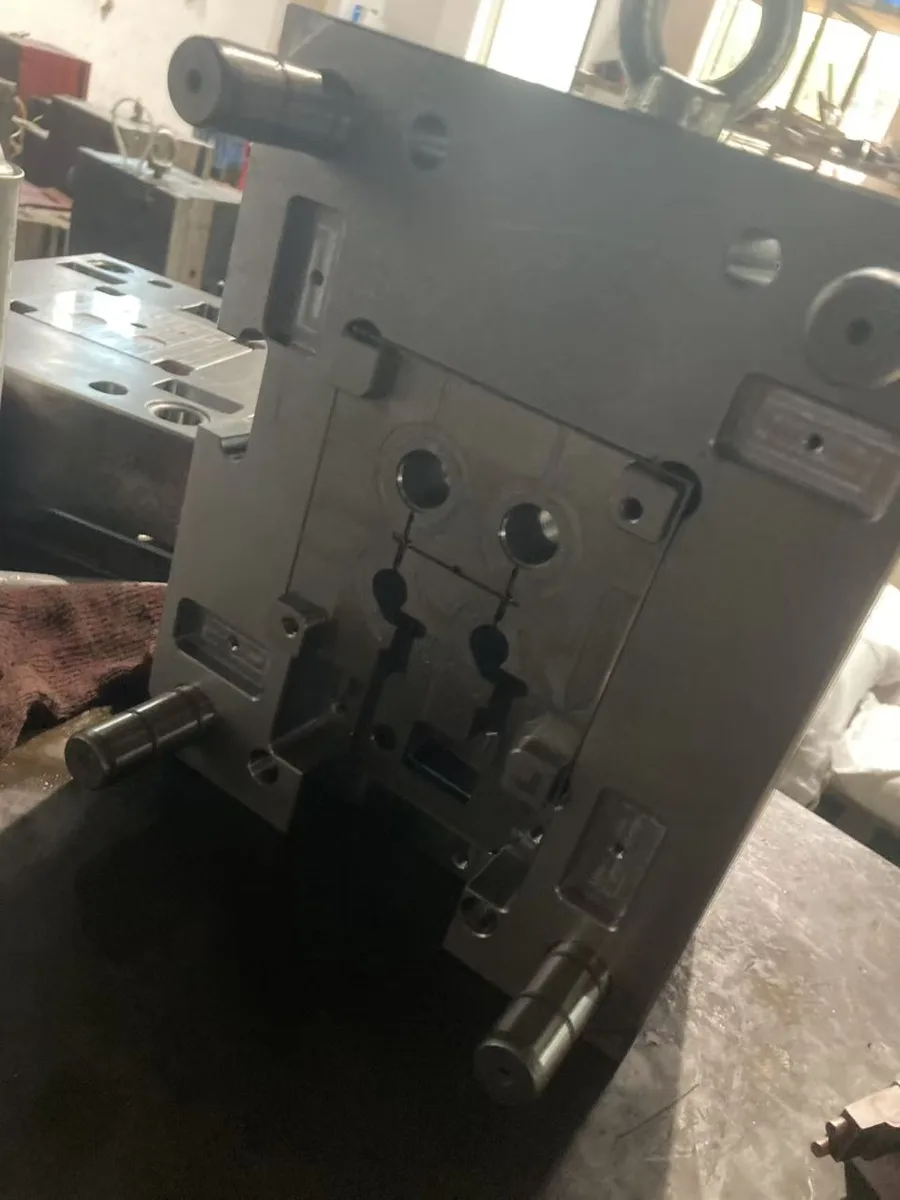
1. Daily, Weekly and Per-Shutdown Cleaning: How to Set Frequency
You need three frequency tiers: per shift or daily, weekly, and per shutdown. The per-shutdown tier is the one you are most likely to skip and the one that saves you the most money.
Table 1 · Three frequency tiers
| Tier | What happens | Who signs |
|---|---|---|
| Per shift / daily | Parting line, cavity wipe-down, gas vent check, release buildup | Operator, at the press |
| Weekly | Water-line check, ejector-pin lubrication, rust inspection on non-cosmetic faces | Toolroom |
| Per shutdown | Full clean, preservation coat, water blown out, mold stored sealed | Maintenance, before storage |
A plastic injection mold maintenance checklist only works if the frequency lives in a sign-off sheet, not in an experienced operator's head. We help clients turn their plastic injection mold maintenance routine into a plastic injection mold maintenance checklist pdf and a plastic injection mold preventive maintenance checklist excel that the shop floor actually fills in. If you want to know how to maintain a plastic injection mold properly, start by making the schedule visible.
Once the frequency is set, the next question is what you clean with.
2. Cleaning Agents: What Is Safe on What Steel
You should choose a plastic injection mold cleaner by steel grade and coating, not by price. P20, H13 and S136 respond differently to alkaline, acidic and solvent-based plastic injection mold cleaners. A cleaner that is safe on one steel can stain or attack another.
Table 2 · Cleaner class against steel
| Steel / coating | Generally safe | Watch out for |
|---|---|---|
| P20, pre-hardened | Mild alkaline, neutral solvent wipe | Strong acid dips on polished faces; staining on bare steel |
| H13, heat-treated | Solvent-based, mild alkaline | Acid attack at weld-repaired zones; residue in vent slots |
| S136, stainless | Most alkaline and solvent agents | Chloride-bearing agents; still check coating compatibility |
| Coated (PVD / chrome) | Neutral agents only | Anything abrasive or strongly alkaline dulls or blisters the coating |
For how to clean plastic injection mold surfaces, we use a simple order: dry before wet, soft before hard. Cleaning plastic injection mold work should start with dry wiping and soft brushes, and only then move to solvents. Plastic injection mold cleaning near polished or coated surfaces needs extra care, because aggressive agents dull the finish you paid for. If you run color changes, a plastic injection color change mold cleaner with the right solvent strength saves you hours without damaging the cavity.
You should confirm compatibility with your steel and coating before you let anyone spray a new agent into the mold.
3. Rust, Water Lines and Cooling Efficiency
Water-line scale quietly destroys cooling efficiency, and poor cooling stretches your cycle time. You need a water-line descaling schedule, not a reaction after the cycle time drifts.
Rust prevention has three fronts: shutdown protection, parting-line protection, and ejector-pin protection. To reduce the wear of plastic injection mold tooling, you should combine descaling with routine inspection of seals, hoses and manifolds. A wear resistant plastic injection mold is not only a steel choice — it is a maintenance habit. We ask clients to keep a water-line and rust-prevention log alongside the cleaning sheet.
The early sign. Cycle time creeping up 2–3 seconds with unchanged settings is usually scale, not the machine. Descale before you touch the process.
Once cooling is stable, surface quality comes down to polishing and release.
4. Polishing, Release Upkeep and the Maintenance Checklist
Plastic injection mold polishing is not about making the cavity as shiny as possible; it is about meeting the cosmetic standard. We define plastic injection mold polishing techniques and plastic injection mold polishing finish examples by grade — what finish the part needs, and what finish the mold should therefore carry.
- Grade first. The cosmetic standard decides the polish grade, not the operator's preference.
- Release residue. Track release-agent use and clean the buildup before it becomes an appearance defect.
- Signed per item. Polish grade and release upkeep each carry a sign-off, like every other line.
Release upkeep matters just as much. You should track release-agent use and clean residue before it builds up and causes appearance defects. A working plastic injection mold maintenance checklist includes polishing grade, release upkeep, and the sign-off for each. That is what separates plastic injection mold maintenance from occasional cleaning.
Even with good daily care, molds fail — and that takes you into repair.
5. Weld Repair and Cavity Rework When a Mold Fails
Plastic injection mold repair usually starts with a cracked cavity, a chipped corner, or wear on a sealing surface. Weld repair is the common fix, but you should understand the risk: the heat-affected zone can soften the steel and change dimensions. After any weld repair, you should re-run a tryout and re-measure critical dimensions rather than assume the mold is back to original.
We recommend you agree with your supplier in advance on repair records and how they connect to the warranty. That way a repair does not quietly void your coverage.
Whether you repair or replace depends on the life-expectancy math.
6. Shot Count, Life Expectancy and Repair vs New
Plastic injection mold life expectancy and plastic injection molding mold life are ranges, not single numbers. A durable plastic injection mold, a durable precision plastic injection mold, and a durable precision plastic parts injection mold all earn the word "durable" from the same three things: steel grade, heat treatment, and maintenance discipline.
To decide repair versus new, you should calculate cost per thousand shots, not guess. We help clients set a decision rule — when repair cost per shot exceeds new-mold cost per shot, or when scrap rate crosses a threshold, it is time to replace.
Beyond that decision sits one more line: the warranty boundary.
7. Four Checklist Items: Vent Cleaning, Water Descaling, Pin Lubrication, Parting-Line Rust
We keep four items on every mold plastic injection molding preventive maintenance schedule, each with its own frequency: vent cleaning, water descaling, ejector-pin lubrication, and parting-line rust prevention. You can copy these four directly into your own sign-off sheet. They are the minimum that keeps a mold running between major services.
Table 3 · The four-item schedule
| Item | Frequency | Failure if skipped |
|---|---|---|
| Vent cleaning | Every shift / daily | Burns, short shots, gas marks at the last-filled edge |
| Water descaling | Monthly, or when cycle time drifts | Lost cooling, longer cycle, warpage |
| Ejector-pin lubrication | Weekly | Galling, bent pins, part sticking, cracked boss |
| Parting-line rust prevention | Per shutdown, plus storage | Flash, stepped parting line, cosmetic marks |
Once the checklist is in place, the last question is who is responsible when something goes wrong.
8. Warranty Boundary: Design and Build Defects, Not Misuse
You should write the warranty boundary into the contract. The warranty covers design and build defects — wrong steel, poor heat treatment, machining errors. It does not cover misuse: over-temperature, over-pressure, skipped maintenance, or the wrong cleaning agent.
Table 4 · Warranty boundary
| Covered | Not covered |
|---|---|
| Wrong steel grade or unverified heat treatment | Over-temperature or over-pressure running |
| Machining errors against the approved drawing | Skipped maintenance, or a cleaning agent the supplier advised against |
| Design defects in gating, cooling or ejection | Cavity wear from abrasive resin beyond the agreed life assumption |
We spell this out because most disputes we see are not about whether the mold failed, but about why. Clear boundaries protect both sides.
9. Why 500k and 5M Life Ratings Can Both Be Honest
A 500,000-shot rating and a 5,000,000-shot rating can both be honest, because life ratings assume specific conditions — resin, cycle time, maintenance interval, and steel. When you compare suppliers, compare life under the same assumptions, not the size of the number. A rating without stated assumptions is not a rating.
This brings us back to the main line: life is maintained, and it is also agreed.
Get the maintenance sheet with the mold. Send your annual volume and resin. You get the three-tier cleaning sheet, the cleaner table for your steel grade, the four-item preventive schedule, and the warranty boundary written into the tooling agreement.
Start the quote on WhatsApp (+86 191 1290 5173) or email 877657530@qq.com
Three life figures, three denominators. 500,000 shots is a general production mold with the resin and the maintenance level unstated; one million is a precision tool under standard maintenance; 500,000 to 10 million is a band that moves with structure and material. None of them is wrong — each is a number without its conditions until you ask for the four.
All 34 pages in this injection mold guide
Foundations and design
- Hub: types, structure, companies
- Mold types, pros and cons
- Design service and workflow
- Mold flow analysis and 3D design
- Gate, runner, cooling, ejection
- Mold steel, aluminum and copper
- Commodity plastics: PP, ABS, PC
- Engineering plastics: PA, POM, PBT
Cost and delivery
- Cost breakdown
- Price range, quote, lead time
- Prototype, low volume, mass production
- Quality, class, defects, safety
- Custom mold: drawing to T1
- Machine tonnage and fit
Sourcing and supply
- Tooling service: CNC, EDM, tryout
- Manufacturers and maker directory
- Factory layout and audit
- Suppliers, exporters and verification
- China supply, price, export
- China OEM / ODM process
By industry
- Medical
- Electronics
- Refrigerator and white goods
- Small appliance and houseware
- Automotive interior and exterior
- Automotive engineering plastics
- Motorcycle plastics
- Packaging, crate, pallet
- Cup, cutlery, container
- Furniture and chair
- Industrial, agricultural, construction
- Machine tonnage and fit
- Product cases: spoon, stopper, cup, sensor
Talk to the factory
WhatsApp and email reach the same team that cuts the steel, not a trading desk. Send the 3D file, the annual volume and the resin grade, and you get a quote with cavity count, steel and lead time.
- WhatsApp: +86 191 1290 5173
- Email: 877657530@qq.com
- Mold catalogue in English: Injection molds built in Chongqing · Catálogo en español