




Mold Steel, Aluminum and Copper Alloy: Which Material When
The material you choose for your plastic injection mold decides how long the tool lasts, how well it polishes, how fast it cools, and how much it costs. Injection mold steel is the default for production, but aluminum and beryllium copper have legitimate roles in prototyping and in heat-critical zones. This page compares P20 vs 718 mold steel, explains when S136 and H13 earn their higher price, and shows where an aluminum mold for plastic injection makes sense. For the broader picture of structure and buying, start with our plastic injection mold hub page .
| Pre-hardened | P20 · 718 · NAK80 at 28–36 HRC |
|---|---|
| Hardened | S136 · H13 at 48–54 HRC |
| Aluminum advantage | 3–5× faster to machine |
| BeCu advantage | 3–5× steel conductivity |
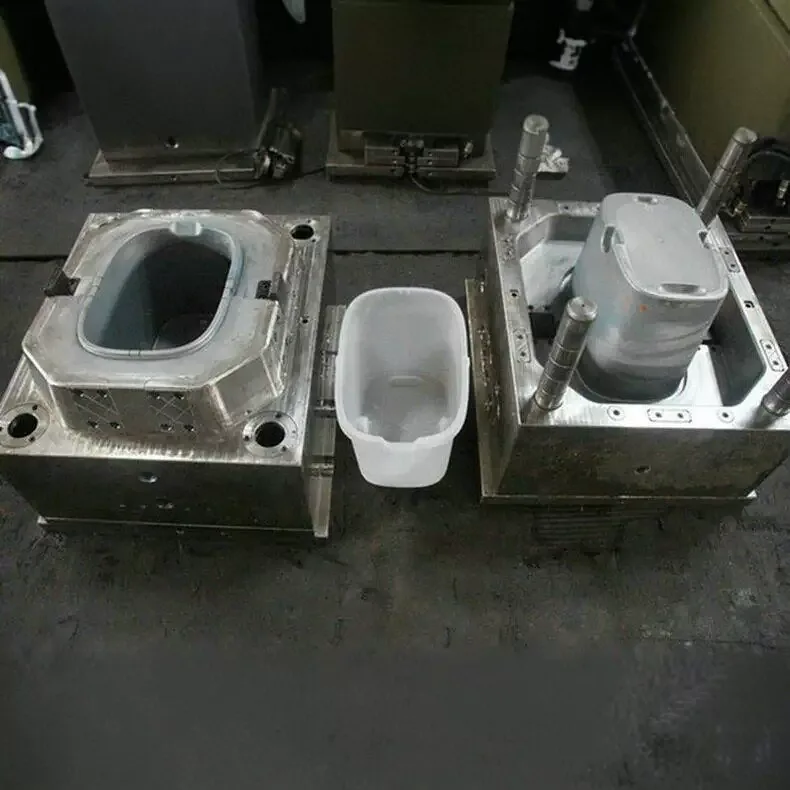
1. P20 and 718: Pre-Hardened Workhorses
P20 and 718 are pre-hardened steels, delivered at roughly 28–34 HRC and ready to machine without a post-machining heat treatment. They are the default plastic injection mold tool steel for the majority of production tools because they balance hardness, machinability, and cost.
P20 is the workhorse: good machinability, adequate polishability for most cosmetic parts, and enough hardness for millions of shots in unfilled resins. Plastic injection mold p20 steel is widely available and widely understood, which keeps lead time short.
718 is a modified P20 with better through-hardness and improved polishability, typically used for larger cavity blocks and for parts with higher cosmetic requirements. The p20 vs 718 mold steel comparison usually comes down to this: P20 for general-purpose tools where cost matters, 718 where the cavity block is large or the surface finish is demanding. Neither is a good choice for abrasive glass-filled resins or corrosive PVC — that is where the hardened grades come in.
2. S136 and H13: When Hardness Matters
S136 and H13 are hardened steels, heat-treated after machining to reach 48–54 HRC. They cost more and take longer to make, but they hold up where P20 and 718 would wear, corrode, or lose polish.
S136 is a stainless mold steel with excellent polishability and corrosion resistance. It is the standard choice for optical parts, medical parts, and any application where plastic injection mold cavity steel must resist corrosive resins (PVC, flame-retardant grades) or maintain a mirror finish over millions of shots. Pre-hardened P20 vs polished S136 and NAK80 is a common comparison: P20 is cheaper and faster, S136 polishes to a higher gloss and resists corrosion, and NAK80 sits between them as a pre-hardened steel with good polishability.
H13 is a hot-work steel with high toughness and wear resistance, typically used for abrasive glass-filled resins and for cores that see high stress. Plastic injection mold tool steel hardness for H13 is usually 48–52 HRC; going harder improves wear resistance but reduces toughness. Which tool steel is right for your plastic injection mold depends on the resin: unfilled ABS or PP rarely justifies H13, but 30% glass-filled PA will wear a P20 tool quickly.
3. Aluminum Molds for Prototype and Low Volume
An aluminum mold for plastic injection is the right choice when you need parts fast and your volume is low. Aluminum machines 3–5 times faster than steel, conducts heat better (shorter cooling time), and costs less for a simple tool. The aluminum plastic injection mold base and aluminum plastic injection mold cavity are typically 7075 or 6061 alloy, chosen for machinability and dimensional stability.
The limits are real. Aluminum is softer than steel, so it wears faster in abrasive resins and cannot hold tight tolerances over hundreds of thousands of shots. An aluminum plastic injection mold base miniature tool for a small prototype part may produce a few thousand shots before the cavity shows wear. An aluminium mold for plastic injection (the British spelling is common in sourcing) is best for bridge tooling, market-test quantities, and parts with generous tolerances.
A custom plastic injection mold with steel or aluminum base is a common hybrid: aluminum for the prototype phase, steel for production. Alloy steel plastic injection mold base options (pre-hardened alloy blocks) sit between the two in cost and life.
4. Beryllium Copper for Hot Spots and Cores
Beryllium copper (BeCu) is not a mold base material — it is a thermal solution for specific zones. BeCu conducts heat roughly 3–5 times better than steel, so it is used for cores, inserts, and hot spots where steel cooling is too slow. A 4 steel multi material plastic injection mold with BeCu inserts in the thick sections can cut cycle time and reduce warpage without changing the rest of the tool.
The trade-offs: BeCu is expensive, softer than steel, and requires careful handling (beryllium dust is a health hazard during machining). It is best used selectively — a BeCu core pin in a deep boss, a BeCu insert at a hot spot — rather than for the entire cavity.
Where BeCu pays. Deep bosses, thick-section cores and hot spots that steel cooling cannot reach. A whole BeCu cavity is a thermal answer to a problem nobody has, at a price nobody wants.
5. Hardness, Polishing and Life Expectancy
Table 1 · Material comparison
| Material | Hardness (HRC) | Polishability | Typical life | Best for |
|---|---|---|---|---|
| P20 | 28–34 | Good | 100k–1M shots | General production, unfilled resins |
| 718 | 30–36 | Very good | 500k–1M+ shots | Large blocks, cosmetic parts |
| S136 | 48–54 | Excellent | 1M+ shots | Optical, medical, corrosive resins |
| H13 | 48–52 | Good | 1M+ shots | Abrasive glass-filled resins |
| Aluminum | ~150 HB | Fair | 1k–10k shots | Prototype, bridge tooling |
| BeCu | ~30 HRC | Good | Insert-level | Hot spots, cores |
Hardened high-volume multi material plastic injection mold tools usually specify S136 or H13 for the cavity and a pre-hardened base for the frame. Several views of a closed steel plastic injection mold in a supplier catalog will typically show the cavity block, the base, and the ejector plates — the cavity block is where the steel grade matters most.
Plastic injection mold tool steel mold halves can be different grades: a hard cavity and a softer core is a common cost-saving choice when wear is asymmetric.
6. Choosing Steel by Volume, Resin and Appearance
Four criteria decide the grade: volume, corrosivity, appearance, heat treatment.
Volume
Under ~100k shots, P20 or aluminum is usually enough. Above ~1M shots, S136 or H13 pays for itself in reduced maintenance. Plastic injection mold tool steel selection should be tied to your actual forecast, not to a worst-case assumption.
Corrosivity
PVC, flame-retardant grades, and some acetal resins release corrosive byproducts; S136 (stainless) is the safe choice. Abrasive glass-filled grades and corrosive PVC or flame-retardant grades are the two resin families that most often justify upgrading from P20.
Appearance
Mirror-polish requirements point to S136 or NAK80. Textured surfaces are more forgiving and can use P20 or 718.
Heat treatment
Pre-hardened steels (P20, 718) avoid post-machining heat treatment, which shortens lead time. Hardened steels (S136, H13) require heat treatment after rough machining, which adds time and cost but delivers the hardness.
Table 2 · Resin and duty to grade
| Condition | Grade to specify | Reason |
|---|---|---|
| Unfilled PP / ABS, mid volume | P20, or 718 for large blocks | Pre-hardened, no heat treatment, short lead time |
| 30% glass-filled PA | H13 | Abrasion resistance at 48–52 HRC |
| PVC or flame-retardant resin | S136 | Stainless; resists corrosive byproducts |
| Optical, mirror polish | S136 or NAK80 | Polishability and gloss retention |
| Prototype, market test | Aluminum 7075 / 6061 | 3–5× faster to machine, low volume only |
| Deep boss, thick section | BeCu insert in a steel tool | 3–5× conductivity at the hot spot only |
An alloy steel plastic injection mold base exporter or alloy steel plastic injection mold base factory can supply pre-hardened alloy bases in standard sizes; plastic injection mold x33crs16 steel plate supplier grades are used in some European tooling standards. Steel mold for plastic injection and plastic injection mold steel are broad terms — always specify the grade, not just “steel.”
- Volume. Shot count and annual output decide whether a pre-hardened grade is enough.
- Resin attack. PVC and flame-retardant grades need corrosion-resistant steel, not a cheaper substitute.
- Appearance. Transparent and high-gloss parts need a grade that polishes to the finish, not one that only machines well.
- Heat treatment. A long-life tool needs a grade the shop can actually harden and temper, not one it can only buy.
- Not on price alone. Steel choice sets tool performance, life, machining quality and part precision, so a grade picked on price moves the cost into the tryout.
7. Where to Go Next
If you are comparing quotes, ask each supplier which steel grade they specified for cavity, core, and base — a plastic injection mold company that quotes “steel” without a grade is not giving you a comparable number. Our plastic injection mold design service page explains how steel selection feeds the design; our gate, runner, cooling, ejection and surface page explains how the steel choice interacts with cooling and surface finish.
For the full picture of structure, types, companies and buying, return to our plastic injection mold hub page.
Get a grade recommendation against your resin. Send the resin grade, annual volume and cosmetic requirement. You get a cavity, core and base recommendation with the life expectancy and the cost delta stated in the same table.
Start the quote on WhatsApp (+86 191 1290 5173) or email 877657530@qq.com
All 34 pages in this injection mold guide
Foundations and design
- Hub: types, structure, companies
- Mold types, pros and cons
- Design service and workflow
- Mold flow analysis and 3D design
- Gate, runner, cooling, ejection
- Commodity plastics: PP, ABS, PC
- Engineering plastics: PA, POM, PBT
- Machine selection and clamp tonnage
Cost and delivery
- Cost breakdown
- Price range, quote, lead time
- Prototype and low volume
- Quality, precision, defects
- Cleaning, maintenance, repair
- Custom mold: drawing to T1
Sourcing and supply
- Tooling service: CNC, EDM, tryout
- Manufacturers and maker directory
- Factory layout and audit
- Suppliers and exporters
- China supplier and export
- China custom OEM / ODM
- Import, HS code and duty
By industry
- Medical
- Electronics
- Refrigerator and white goods
- Small appliance and houseware
- Automotive interior and exterior
- Automotive engineering plastics
- Motorcycle plastics
- Packaging, crate, pallet
- Cup, cutlery, container
- Furniture and chair
- Industrial, agricultural, construction
- Machine tonnage and fit
- Product cases: spoon, stopper, cup, sensor
Talk to the factory
WhatsApp and email reach the same team that cuts the steel, not a trading desk. Send the 3D file, the annual volume and the resin grade, and you get a quote with cavity count, steel and lead time.
- WhatsApp: +86 191 1290 5173
- Email: 877657530@qq.com
- Mold catalogue in English: Injection molds built in Chongqing · Catálogo en español