




Commodity Plastics for Injection Molding: PP, ABS, PC, PE, PS
Commodity resins account for the majority of injection molded parts, and the choice between them decides your shrinkage allowance, your surface finish, your impact performance, and your material cost. This page covers pp plastic injection mold, abs plastic part injection mold, and polycarbonate molding selection, plus PE, PS and PMMA, with the shrinkage and drying rules that keep tools in tolerance. For the broader picture of structure and buying, start with our plastic injection mold hub page .
| PP / PE shrinkage | 1.5–3%, directional |
|---|---|
| ABS / PS shrinkage | 0.4–0.7%, uniform |
| PC / PMMA shrinkage | 0.5–0.8%, drying critical |
| Dry to | <0.02% moisture for PC / PMMA |
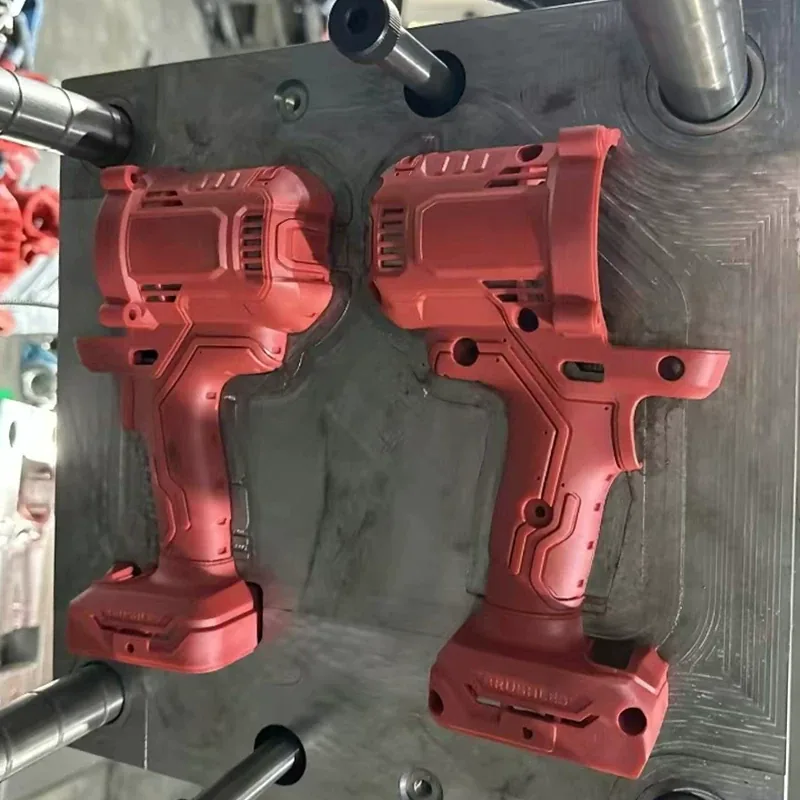
1. Polypropylene: Cheap, Chemical Resistant, High Shrink
Polypropylene (PP) is the lowest-cost commodity resin and the most common choice for containers, caps, crates, and living-hinge parts. A pp plastic injection mold is forgiving to build: PP flows well, fills thin walls, and resists most chemicals. Pp polypropylene plastic injection mold tools are typically P20 or pre-hardened steel because PP is not abrasive.
The catch is shrinkage. PP is semi-crystalline and shrinks 1.5–2.5% (and up to 3% in thick sections), which is roughly three times the shrinkage of ABS. Pp plastic part injection mold and pp plastic parts injection mold designs must compensate for that shrinkage in the cavity dimensions, and the compensation differs along flow versus across flow. PP also warps easily when cooling is unbalanced, so cooling design matters more than for amorphous resins.
Where PP wins: crate grades for logistics and storage, chemical-resistant containers, and any part where cost per unit dominates. A textured pe plastic injection mold or textured PP tool needs extra draft — PP grips a textured surface tightly and will drag without enough release angle.
2. ABS: Surface Finish and Plating
ABS is the default resin for cosmetic housings, appliance panels, and parts that need a painted or plated finish. An abs plastic injection mold produces a good surface finish with moderate shrinkage (0.4–0.7%), and abs plastic part injection mold tools are common in consumer electronics and appliance work.
Abs engineering plastic injection mold grades are used where impact strength and dimensional stability matter. Reliable abs plastic injection mold performance depends on drying: ABS absorbs moisture and must be dried before molding, or the part shows splay and silver streaks. Abs plastic parts injection mold and abs plastic injection mold factory suppliers should specify drying conditions in the molding trial.
Where ABS wins: housing grades for appliances and electronics, plated parts (ABS plates well because of its butadiene content), and cosmetic parts with textured surfaces. ABS is amorphous, so it shrinks less and more uniformly than PP — easier to hold tolerance, harder to keep cost down.
3. Polycarbonate: Impact and Clarity at a Cost
Polycarbonate (PC) is the impact and clarity resin: transparent parts, safety guards, medical housings, and any application where a part must survive impact without cracking. Polycarbonate molding requires higher melt temperatures and more careful drying than PP or ABS — PC absorbs moisture aggressively and will hydrolyze if molded wet.
A pc plastic injection mold tool needs generous gates and runners to avoid high shear, and polished pc plastic injection mold cavities are specified for transparent parts. Pc polycarbonate engineering plastic injection mold designs must account for PC's high melt viscosity: thin walls need high injection pressure, and thick walls need long cooling. High tolerance pc plastic injection mold work requires shrinkage compensation of 0.5–0.7% and careful cooling balance to avoid warp.
Where PC wins: clarity grades for lenses, light guides, and transparent housings; impact-resistant parts; and high-heat applications. PC costs more than PP or ABS, and it is not chemical resistant — solvents and some cleaners will craze it.
4. PE and PS: Where They Still Win
Polyethylene (PE) and polystyrene (PS) are the two resins that persist where cost and specific properties justify them. An odm pe plastic injection mold project typically targets HDPE or LDPE parts: bottles, caps, closures, and chemical tanks. PE shrinks 1.5–3% like PP, flows well, and resists chemicals; HDPE is the workhorse for blow-molded and injection-molded containers.
PS is the low-cost clarity and rigidity resin: disposable cutlery, packaging, and general-purpose housings. General-purpose PS is brittle; HIPS (high-impact PS) adds rubber for toughness. PS shrinks 0.4–0.7% and molds easily, but it is not chemical resistant and it crazes under stress.
Pmma acrylic plastic material injection mold and pmma plastic injection mold work sits alongside PC for transparent parts: PMMA has better optical clarity and UV resistance but lower impact strength. PMMA shrinks 0.4–0.8% and needs drying like PC.
5. Crystalline vs Amorphous: How Much Shrinkage Differs
The single most important resin distinction for tool design is crystalline versus amorphous. Crystalline vs amorphous resin: how much shrinkage differs is the reason two parts of the same size need different cavity dimensions.
Semi-crystalline resins (PP, PE, PA, POM) pack into ordered structures as they cool, so they shrink more: typically 1.5–3%. Shrinkage also differs along flow versus across flow, because the polymer chains orient during fill. Crystalline vs amorphous shrinkage for PP can be 2.0% along flow and 2.5% across flow — enough to matter on a tight-tolerance part.
Amorphous resins (ABS, PC, PS, PMMA) cool without ordering, so they shrink less: typically 0.4–0.7%, and more uniformly in all directions. That is why ABS and PC tools are easier to hold in tolerance than PP tools.
6. Shrinkage Values and Tool Compensation
Shrinkage values and tool compensation is where the design meets the steel. The cavity is cut oversized by the shrinkage percentage: a 100 mm PP dimension with 2% shrinkage needs a cavity cut at 102 mm. But shrinkage is not uniform, so the compensation must be directional.
Table 1 · Shrinkage and compensation rules
| Resin | Typical shrinkage | Directional? | Note |
|---|---|---|---|
| PP / PE | 1.5–2.5%, up to 3% thick | Yes | Compensate differently along and across flow |
| ABS | 0.4–0.7% | No, uniform | Easier to hold tolerance |
| PC | 0.5–0.7% | Uniform | Sensitive to cooling rate |
| PS | 0.4–0.7% | Uniform | Brittle in general purpose grade |
| PMMA | 0.4–0.8% | Uniform | Drying is critical |
Plastic injection mold design should specify the shrinkage used for cavity dimensions and note where trial adjustments are expected. A plastic injection mold manufacturer who quotes without asking for resin and wall thickness is guessing at shrinkage.
7. Transparent Parts: Haze, Flow Marks and What Drying Fixes
Transparent parts (PC, PMMA, PS, and clarified PP) fail in ways opaque parts do not: haze, flow marks, and moisture streaks are visible and unacceptable. Transparent parts: haze, flow marks and what drying fixes is a distinct design and process problem.
Haze comes from surface roughness (polish grade), from moisture, or from crystallization. Polished pc plastic injection mold cavities must be polished to SPI A-1 or better; a textured or EDM-finished cavity will scatter light and look hazy.
Flow marks in transparent parts are visible as wavy lines where the flow front hesitated or where shear stress varied. They come from gate location, injection speed, and cooling imbalance. Simulation helps place the gate so flow marks land outside the viewing area.
Drying fixes moisture-related haze and silver streaks. PC and PMMA must be dried to below roughly 0.02% moisture before molding; wet resin hydrolyzes, and the resulting streaks are permanent. Plastic injection mold trials for transparent parts should include a moisture check and a drying log.
Transparent work is a polish and drying discipline, not a resin choice. A-1 cavity polish plus a dried resin lot is the whole game. Anything less shows up as haze or streaks under the first inspection light — and no process tweak removes it.
8. Selection Table by Part Function
Table 2 · Part function, resin, shrinkage, tool note
| Part function | Resin | Shrinkage | Key tool note |
|---|---|---|---|
| Crates, containers | PP / HDPE | 1.5–3% | High shrink, extra draft for texture |
| Cosmetic housing | ABS | 0.4–0.7% | Dry resin, good polish |
| Plated part | ABS | 0.4–0.7% | Plating-grade ABS |
| Transparent lens / guard | PC / PMMA | 0.5–0.8% | A-1 polish, dry resin |
| Disposable packaging | PS / PP | 0.4–2.5% | Low cost, high cavitation |
| Chemical tank | HDPE | 1.5–3% | Corrosion-resistant steel optional |
Resin by part function, in one line. ABS for housings, PC for transparent and impact parts, PP for crates and thin-wall containers, PA for structural parts, PBT and POM for connectors and gears, PVC for pipe fittings. Pick the function first; the grade follows from it.
9. Where to Go Next
If you are selecting a resin, send us the part function, impact requirement, clarity requirement, and annual volume — we will recommend a resin and the shrinkage compensation that goes with it. Our injection mold steel page explains how resin choice affects steel grade; our plastic injection mold design service page explains how shrinkage and gate location are set in the design.
For the full picture of structure, types, companies and buying, return to our plastic injection mold hub page.
Send the part function, get the resin and shrink. Part function, impact and clarity requirement, wall thickness and annual volume. You get a resin recommendation with the shrinkage compensation, the drying spec and the steel grade it implies.
Start the quote on WhatsApp (+86 191 1290 5173) or email 877657530@qq.com
All 34 pages in this injection mold guide
Foundations and design
- Hub: types, structure, companies
- Mold types, pros and cons
- Design service and workflow
- Mold flow analysis and 3D design
- Gate, runner, cooling, ejection
- Mold steel, aluminum and copper
- Engineering plastics: PA, POM, PBT
- Machine selection and clamp tonnage
Cost and delivery
- Cost breakdown
- Price range, quote, lead time
- Prototype and low volume
- Quality, precision, defects
- Cleaning, maintenance, repair
- Custom mold: drawing to T1
Sourcing and supply
- Tooling service: CNC, EDM, tryout
- Manufacturers and maker directory
- Factory layout and audit
- Suppliers and exporters
- China supplier and export
- China custom OEM / ODM
- Import, HS code and duty
By industry
- Medical
- Electronics
- Refrigerator and white goods
- Small appliance and houseware
- Automotive interior and exterior
- Automotive engineering plastics
- Motorcycle plastics
- Packaging, crate, pallet
- Cup, cutlery, container
- Furniture and chair
- Industrial, agricultural, construction
- Machine tonnage and fit
- Product cases: spoon, stopper, cup, sensor
Talk to the factory
WhatsApp and email reach the same team that cuts the steel, not a trading desk. Send the 3D file, the annual volume and the resin grade, and you get a quote with cavity count, steel and lead time.
- WhatsApp: +86 191 1290 5173
- Email: 877657530@qq.com
- Mold catalogue in English: Injection molds built in Chongqing · Catálogo en español